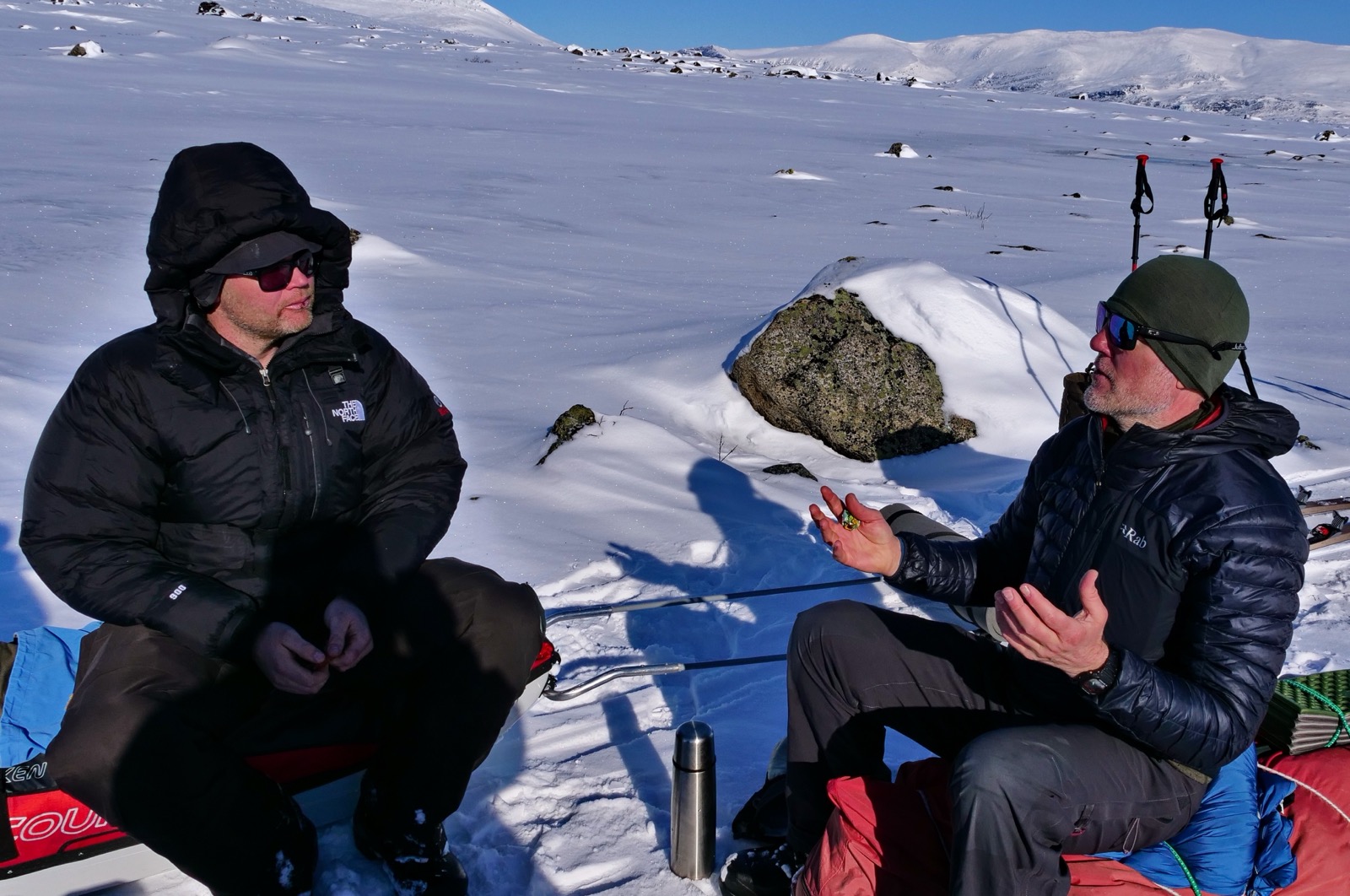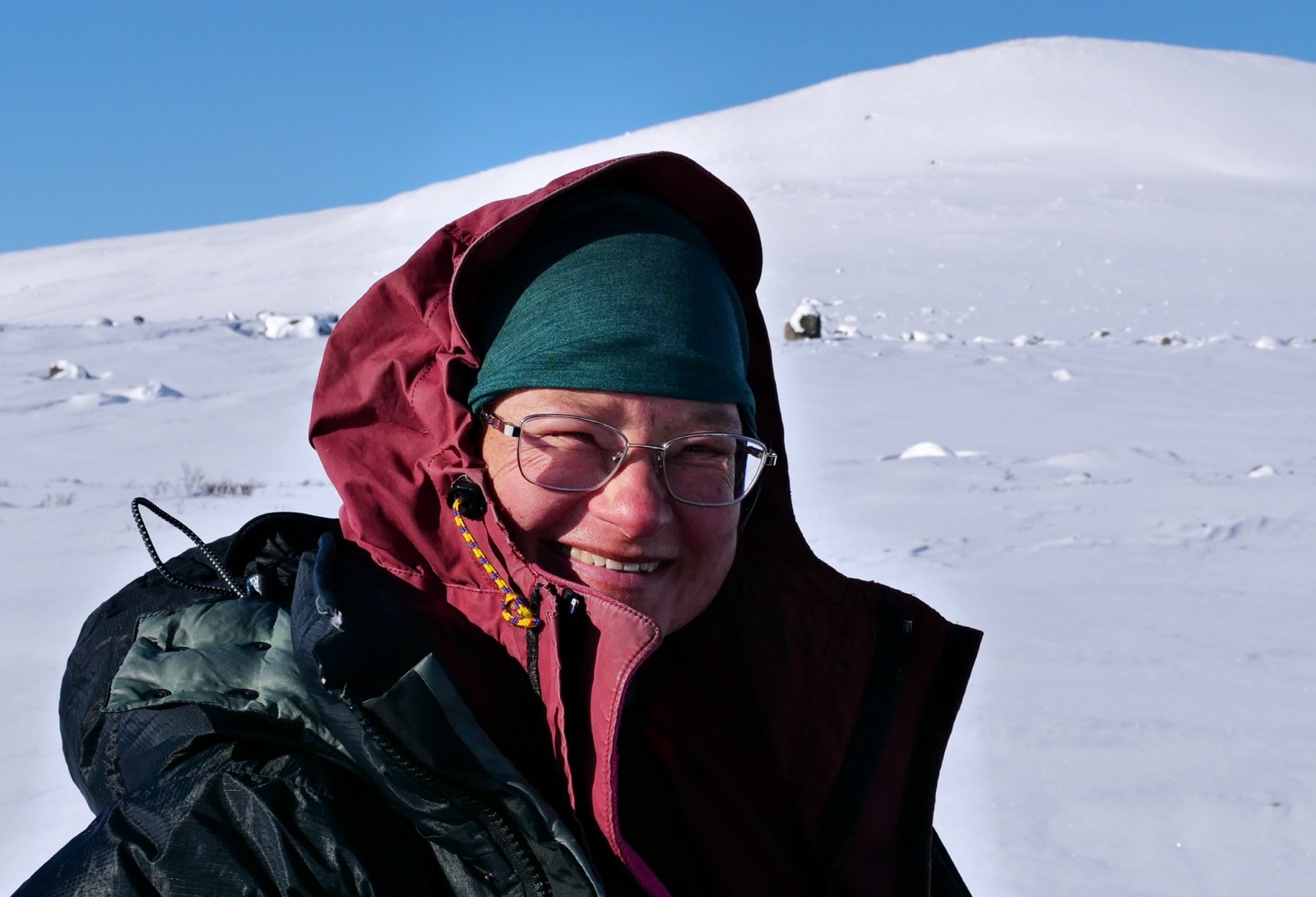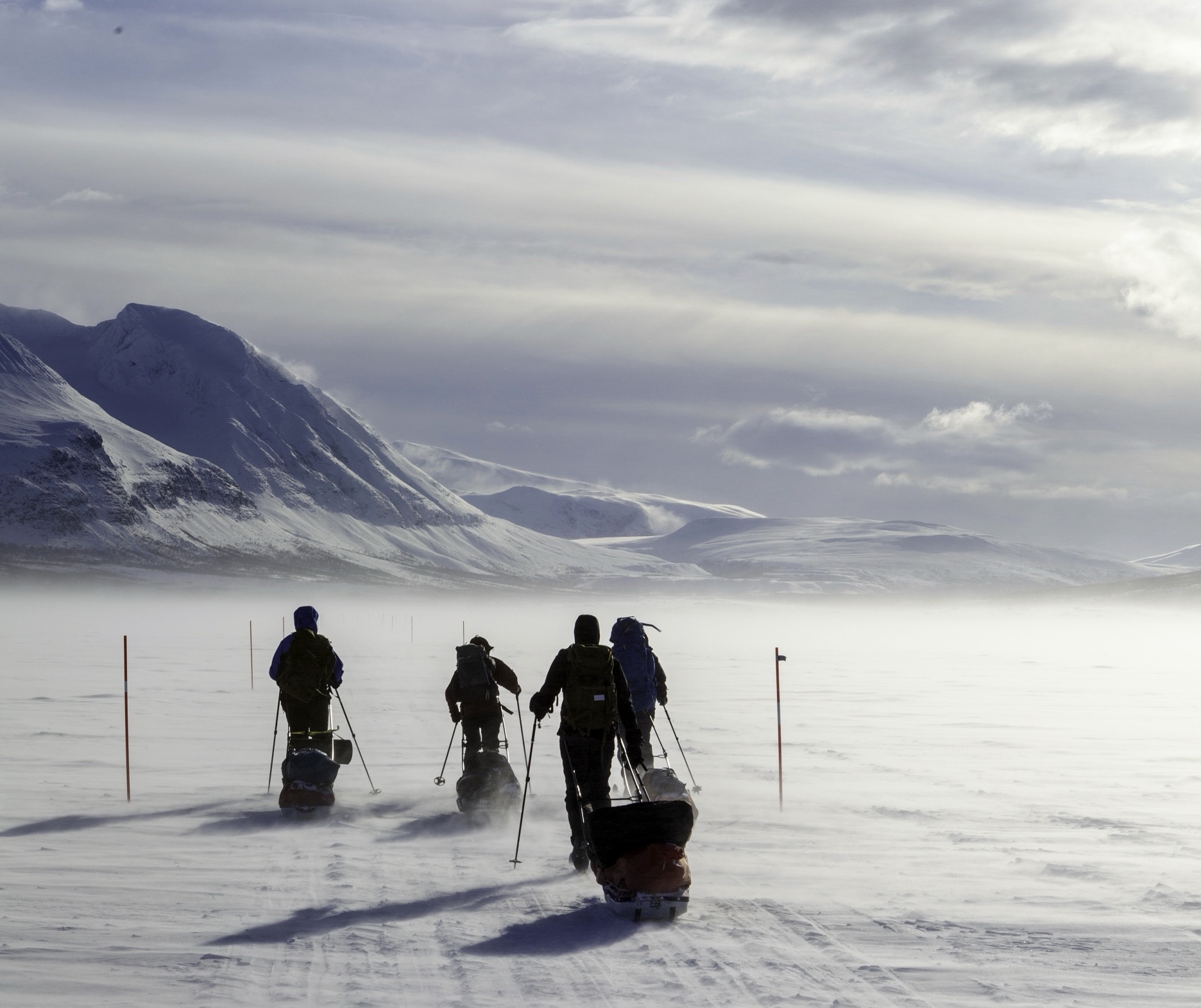
This trip changed my perspective on what the body is capable of and set a new course for my life. By this point, I had already spent many years hiking in the mountains, camping, and gaining experience. But what I felt I was missing when I decided to embark on a truly grueling winter ski expedition was the experience of being out in the cold for an extended period of time. Undertaking what could best be described as a polar expedition was extreme. In fact, the whole idea of this adventure was pretty absurd, since I hadn’t been on skis since I was a child. I’ve simply missed winter activities like skiing my entire adult life. So part of the reason I decided to try this winter trip was that I wanted to find a new type of activity for the winter months when I’m less active outdoors. I also enjoy challenging myself and stepping out of my comfort zone, so from that perspective, this was an ambitious challenge. But I had no idea that this would be the start of a massive change in my life when I first contacted Daniel, who was the guide for this trip.
We started talking a few months before the trip was set to begin, and I started thinking about what I’d need to do to prepare. It takes equipment and training to pull this off. Having the gear for a winter tour of this caliber is a whole different ballgame than hiking in the mountains in the spring and late fall, which I had experience with beforehand. Early on, there was also a question mark about how I’d manage the skiing and, on top of that, pull a heavy sled, since I’m not a skier. The trip was actually intended for those who wanted to go on an advanced ski tour and were experienced and skilled skiers. But since I lived only an hour or so away from Daniel, we decided to meet to discuss the conditions and do a training session that simulates what it’s like to pull a sled—namely, pulling car tires on bare ground. Bare ground is not uncommon for most of the winter where I live, and in that case, you need something similar to a sled to really feel the load on your hips, just like a heavy 40–50 kg sled.

The first time we met, we talked about the equipment, and Daniel showed me what he considered most essential. I didn’t have skis, boots, a sled, or the right clothes. It was a long list of things I needed to buy. I also got to see a homemade device for a car tire, with ropes and a attachment point for a harness or backpack, which Daniel uses for his own training. I stopped by a tire shop that same late January evening and picked up a discarded car tire that was stacked outside. I set up the mounting the next day and, out of curiosity, tried pulling the tire on a long run a few days later. I put on my backpack and had brought along a rope with a shock-absorbing feature that Daniel had designed to reduce jolts, since friction on bare ground is significantly higher than when using a sled on snow. I pulled the tire filled with rocks and also carried about 10 kg of weight in my backpack to get a feel for how this would go. It was incredibly heavy to pull on the asphalt, and where I live, many people raised their eyebrows and wondered what I was doing out training in the middle of the night. I had an 8–9 km route that I started training on several times a week. I also went out to Daniel’s place, and we trained together out in the woods where we could be undisturbed in the dark with headlamps and a tire each in tow.
When I have a training goal and a new adventure on the horizon, it’s easier to commit to giving myself the right conditions to achieve my goals. Through training and preparation, you influence the outcome of what is possible. This applies in every aspect of life. Something happens when you repeat and refine whatever it is you’re doing. If you also get help from someone who supports you and shows you the right path, you can do things you might not have thought were possible on your own. I won’t go too deeply into the preparations here, but for those who enjoy reading about the details of gear, what food I brought, and training, I’ll share a preparation document.
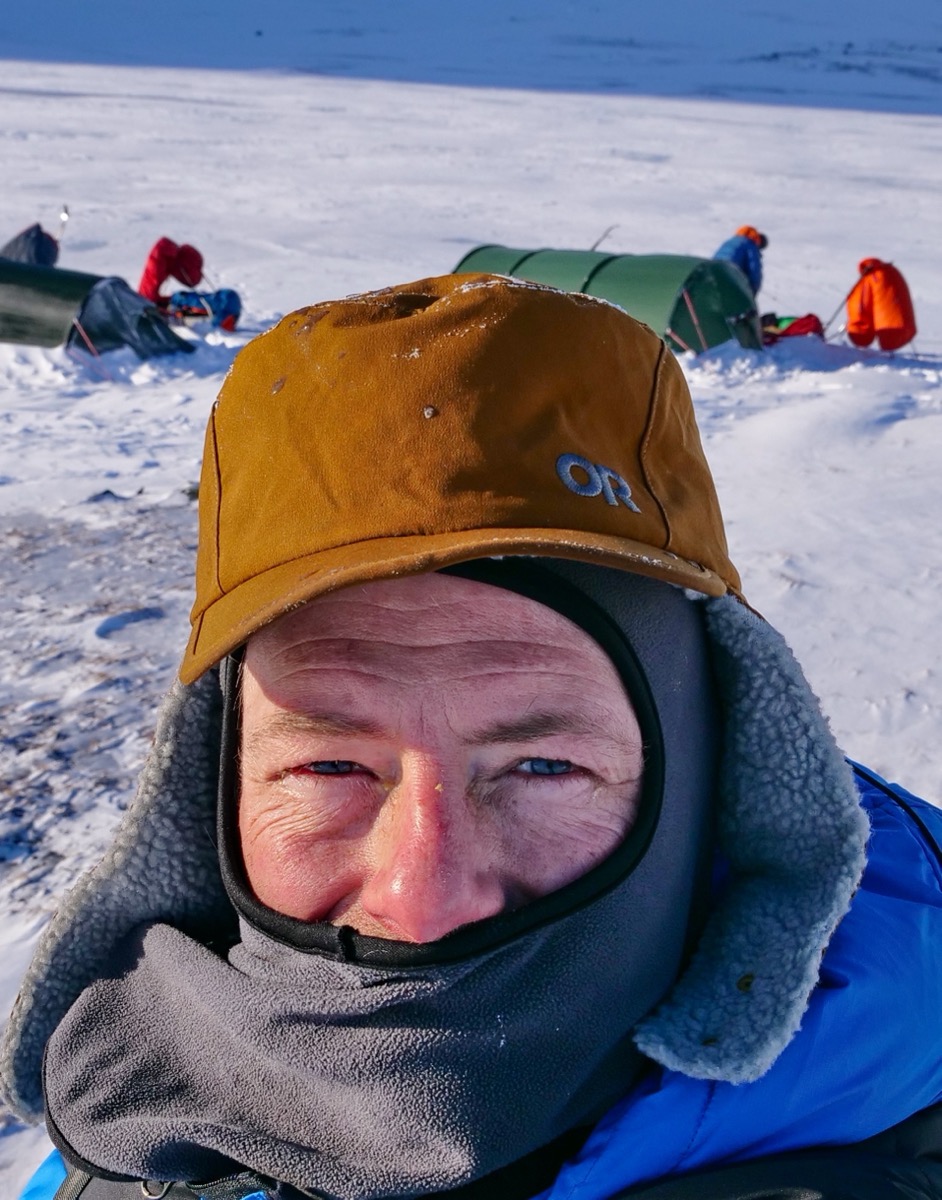
I also want to mention that the photos from the ski trip were taken by both me and Daniel, who had DSLR cameras with us. For me, it was a challenge to take out the camera as much as I would have liked, since the cold from holding the camera in my hands was something I hadn’t realized would be so tough.
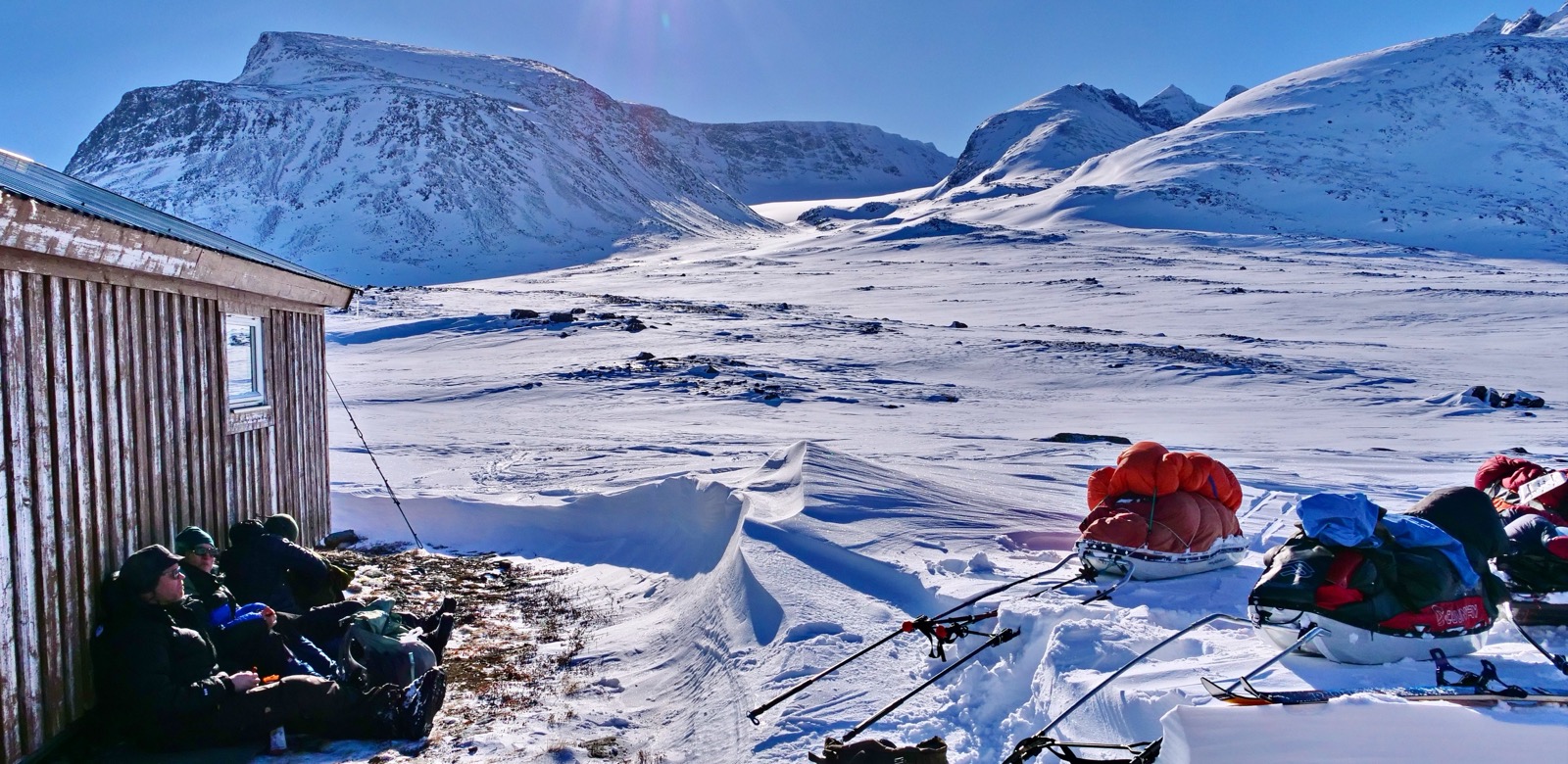
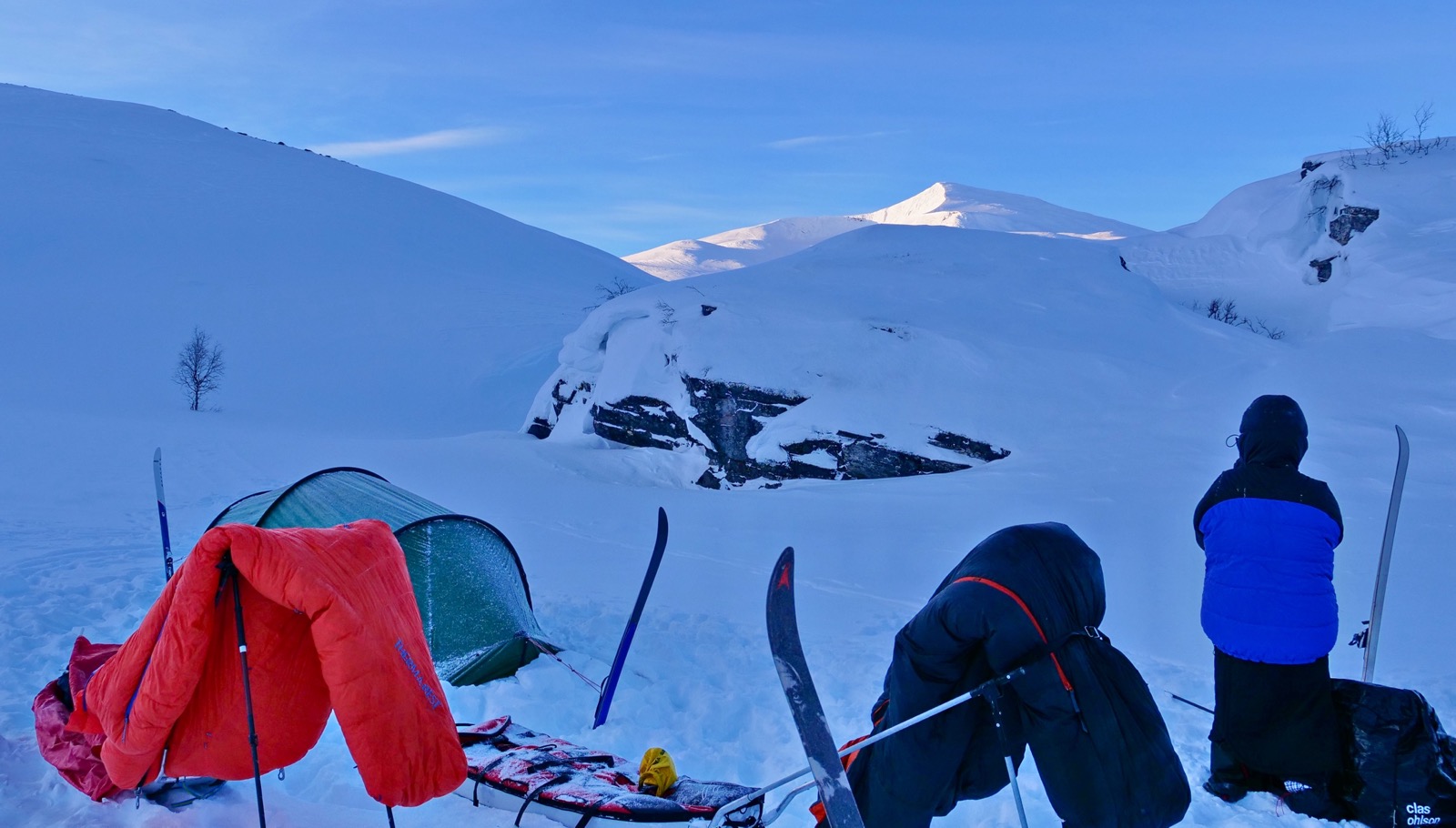
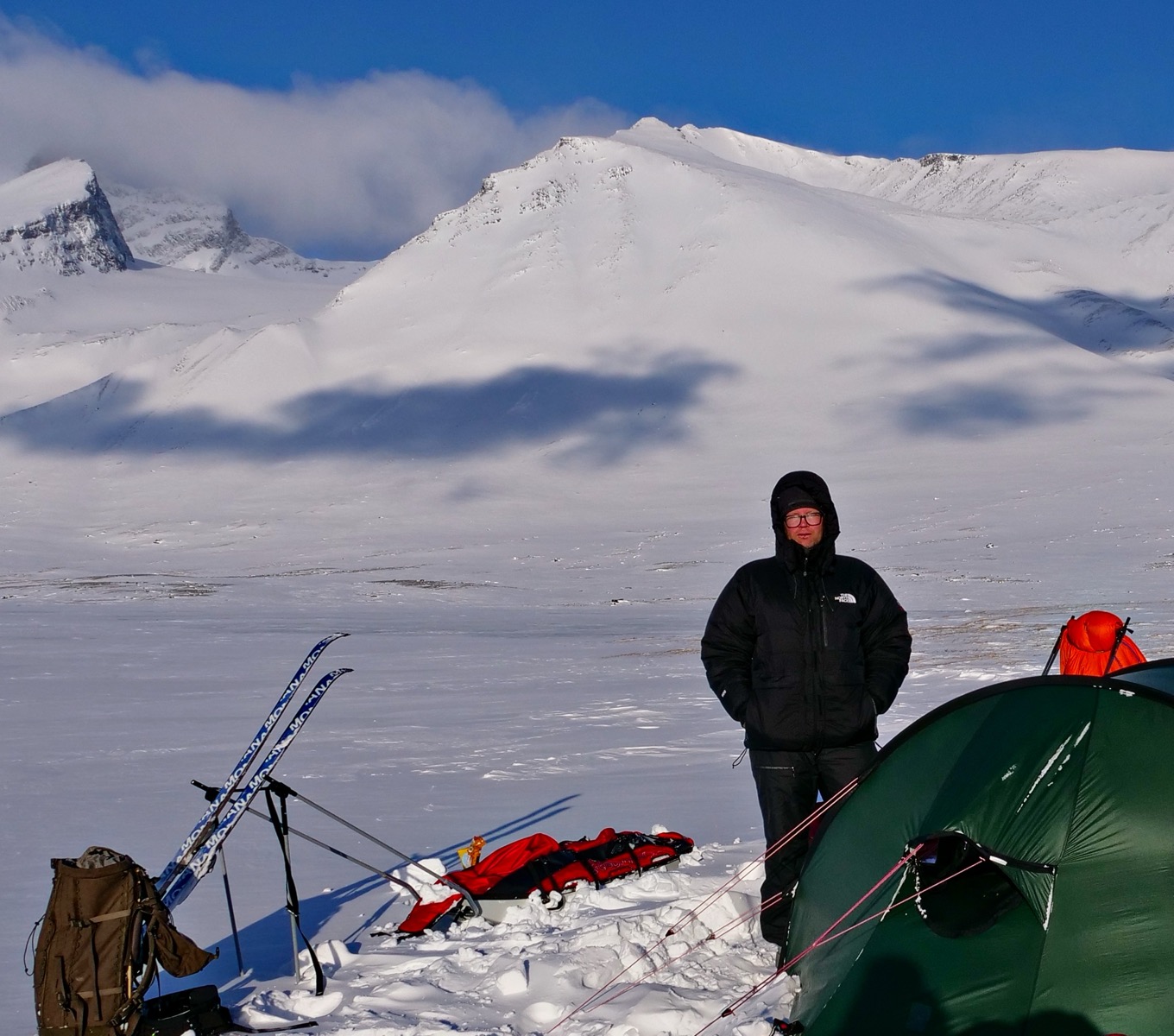
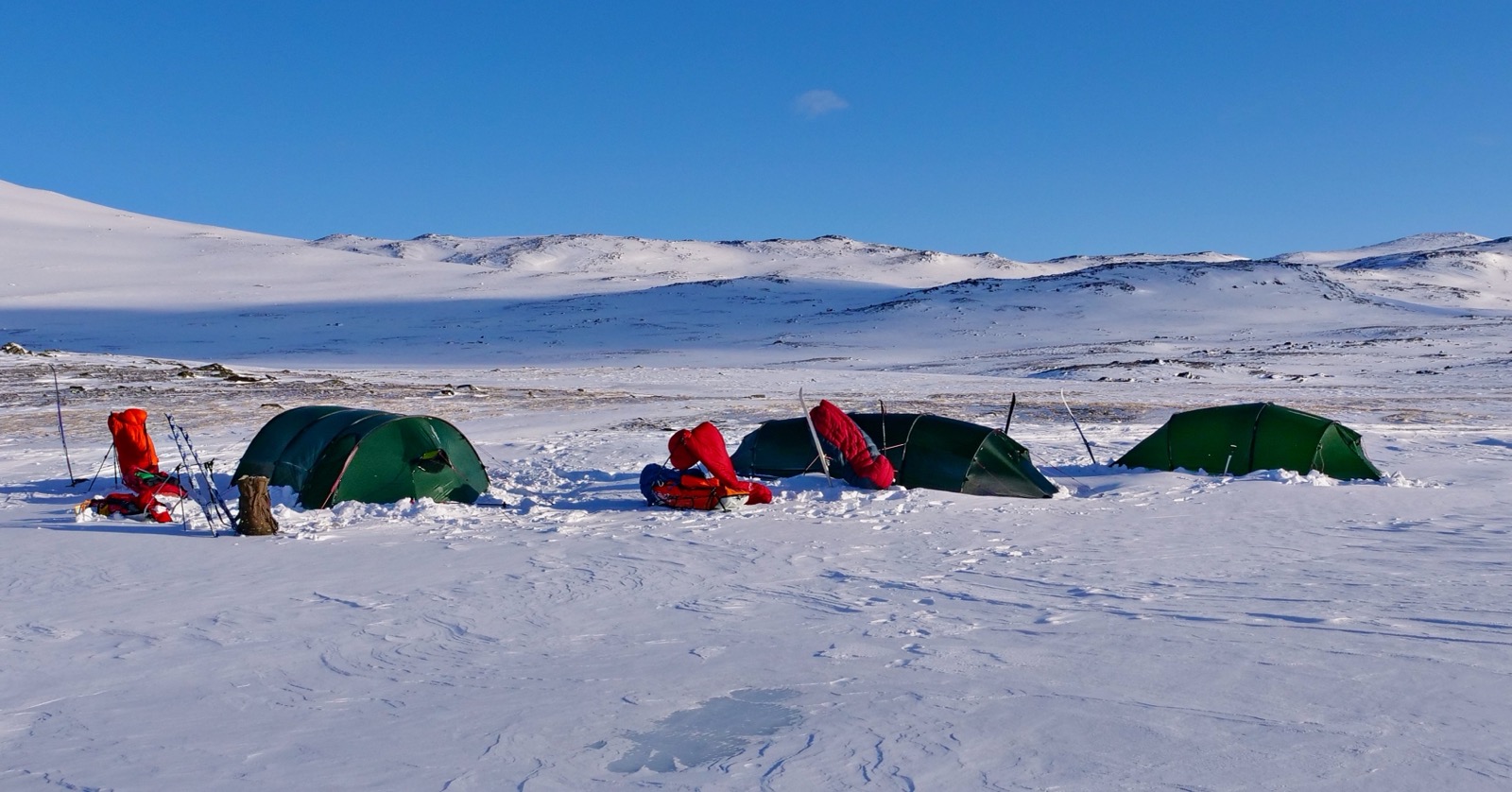
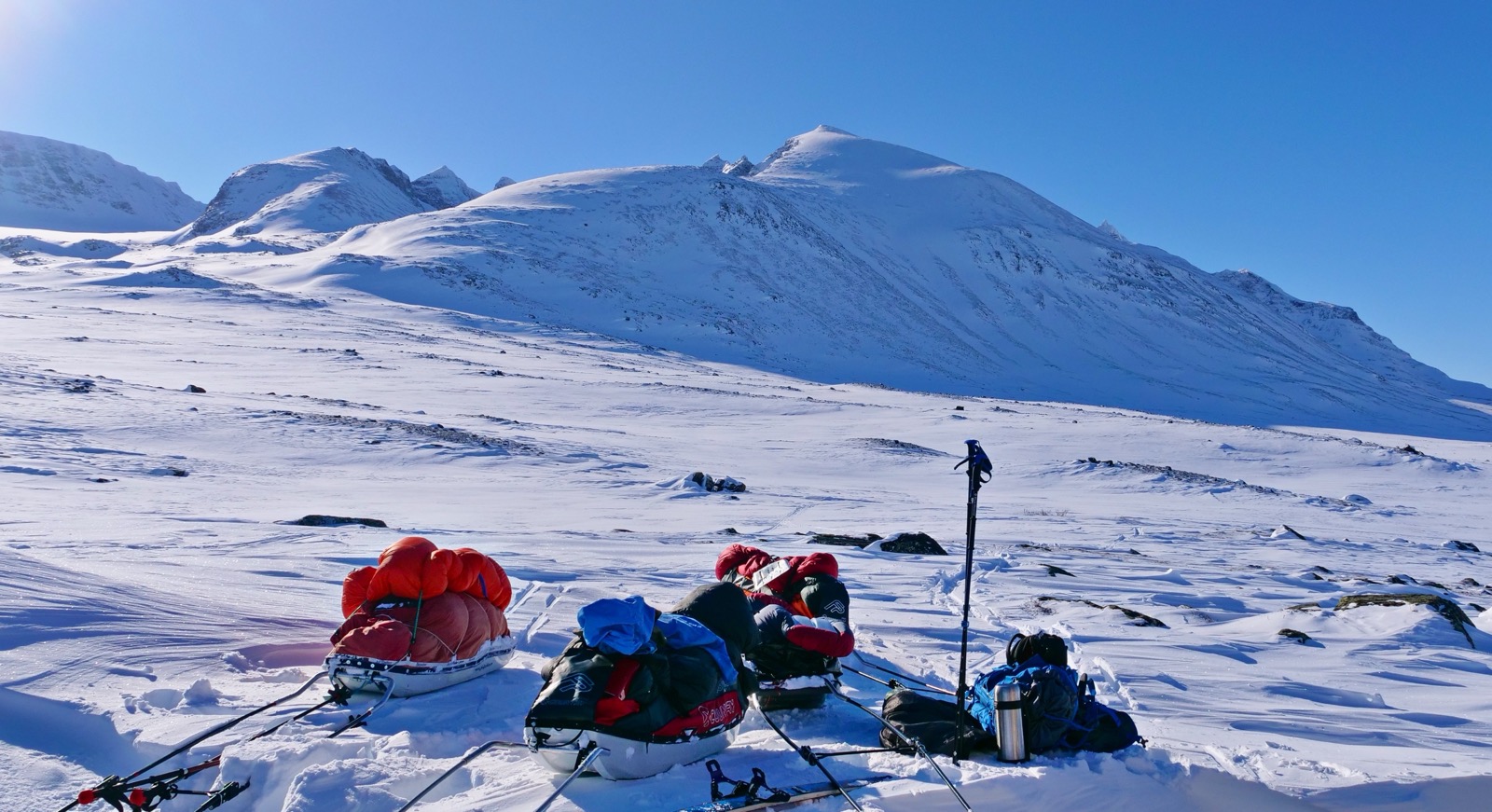
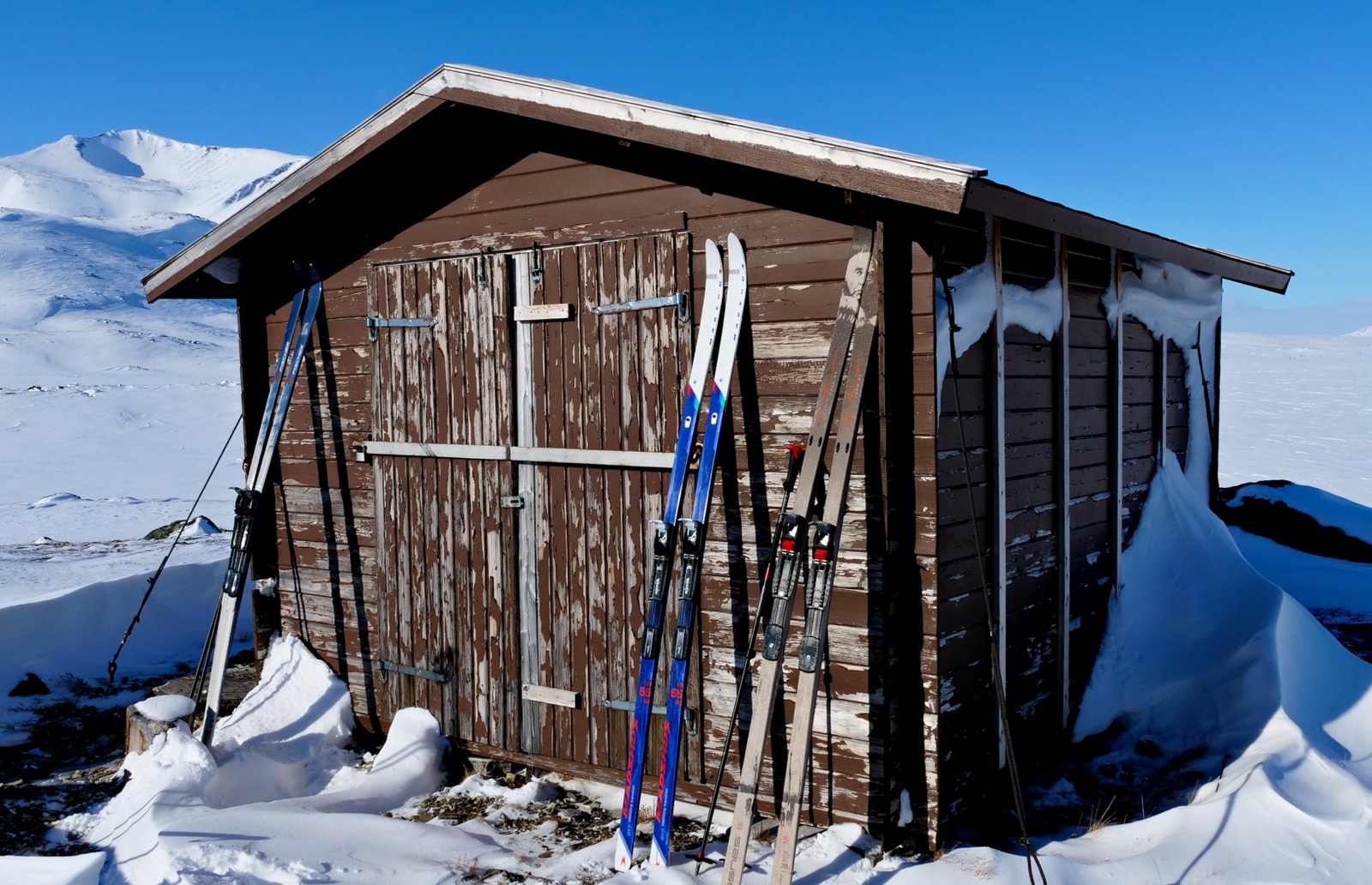
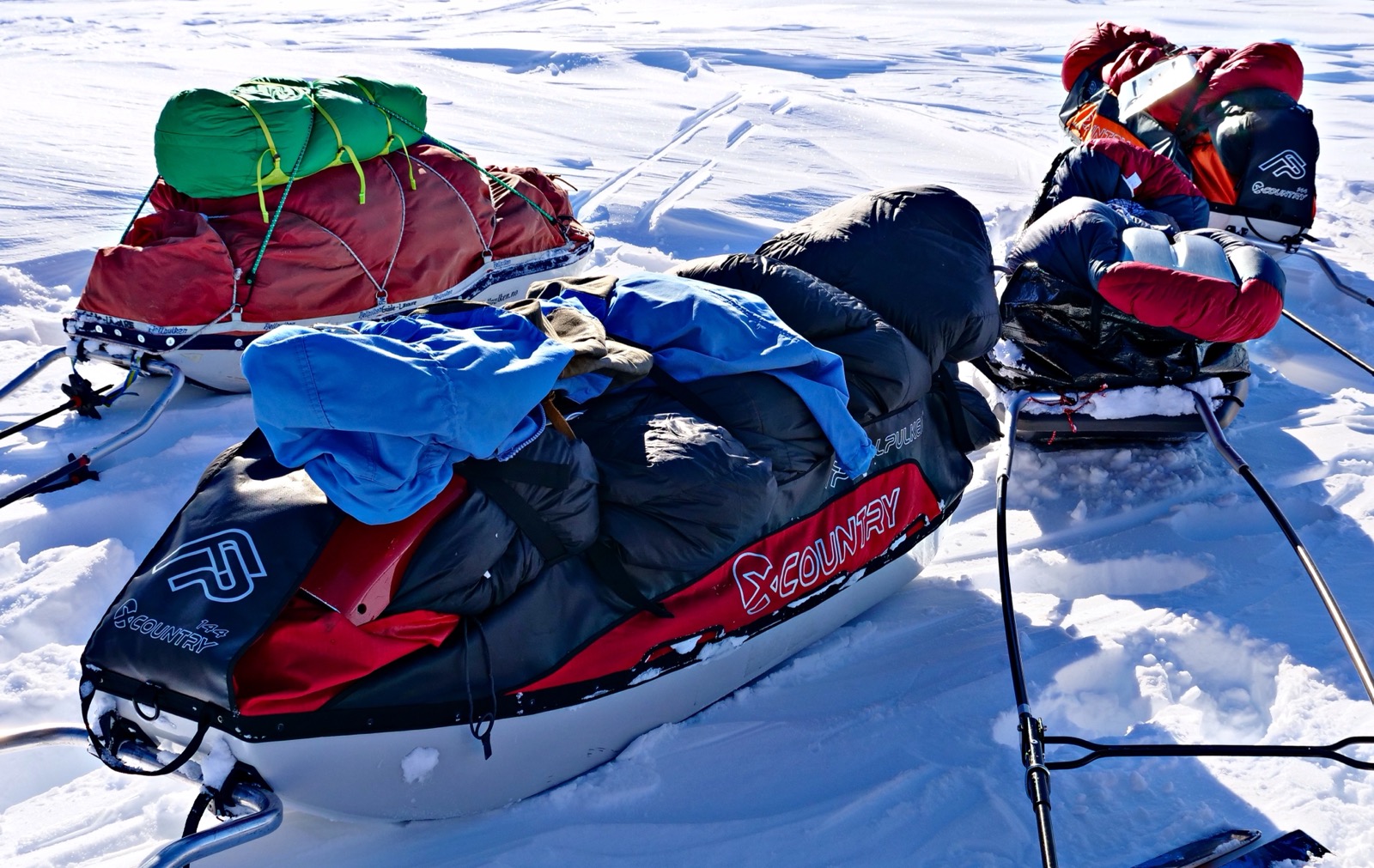
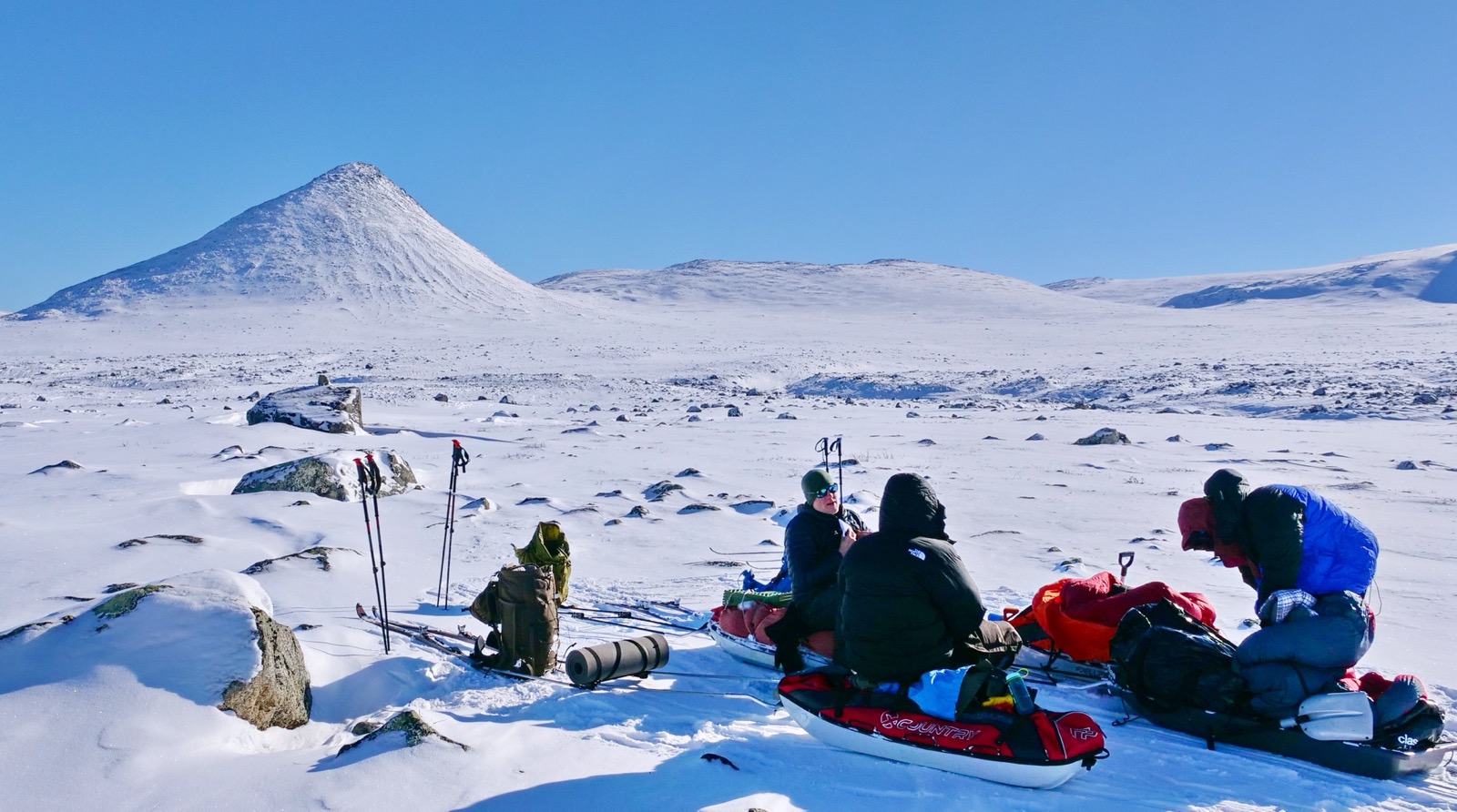
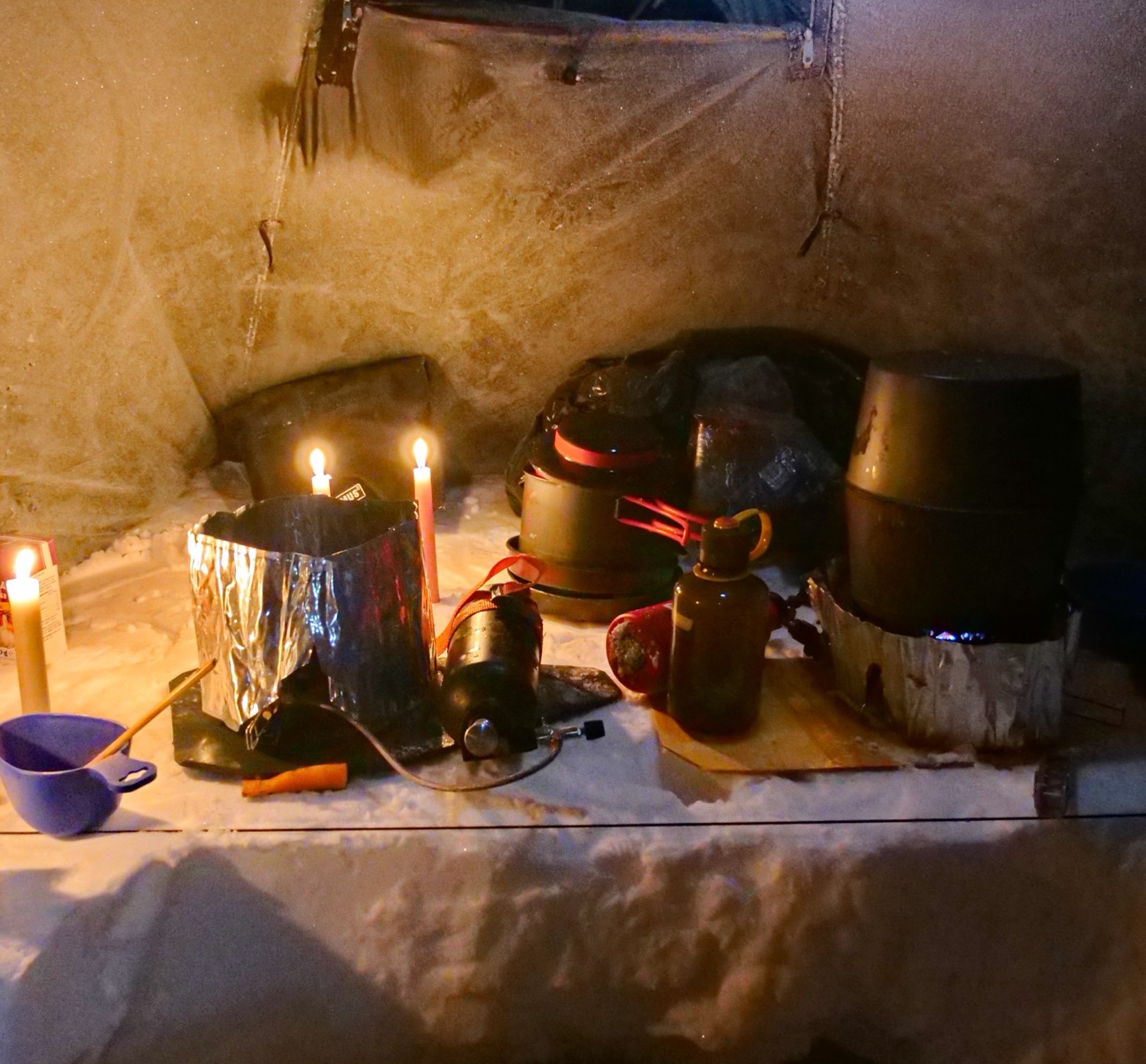
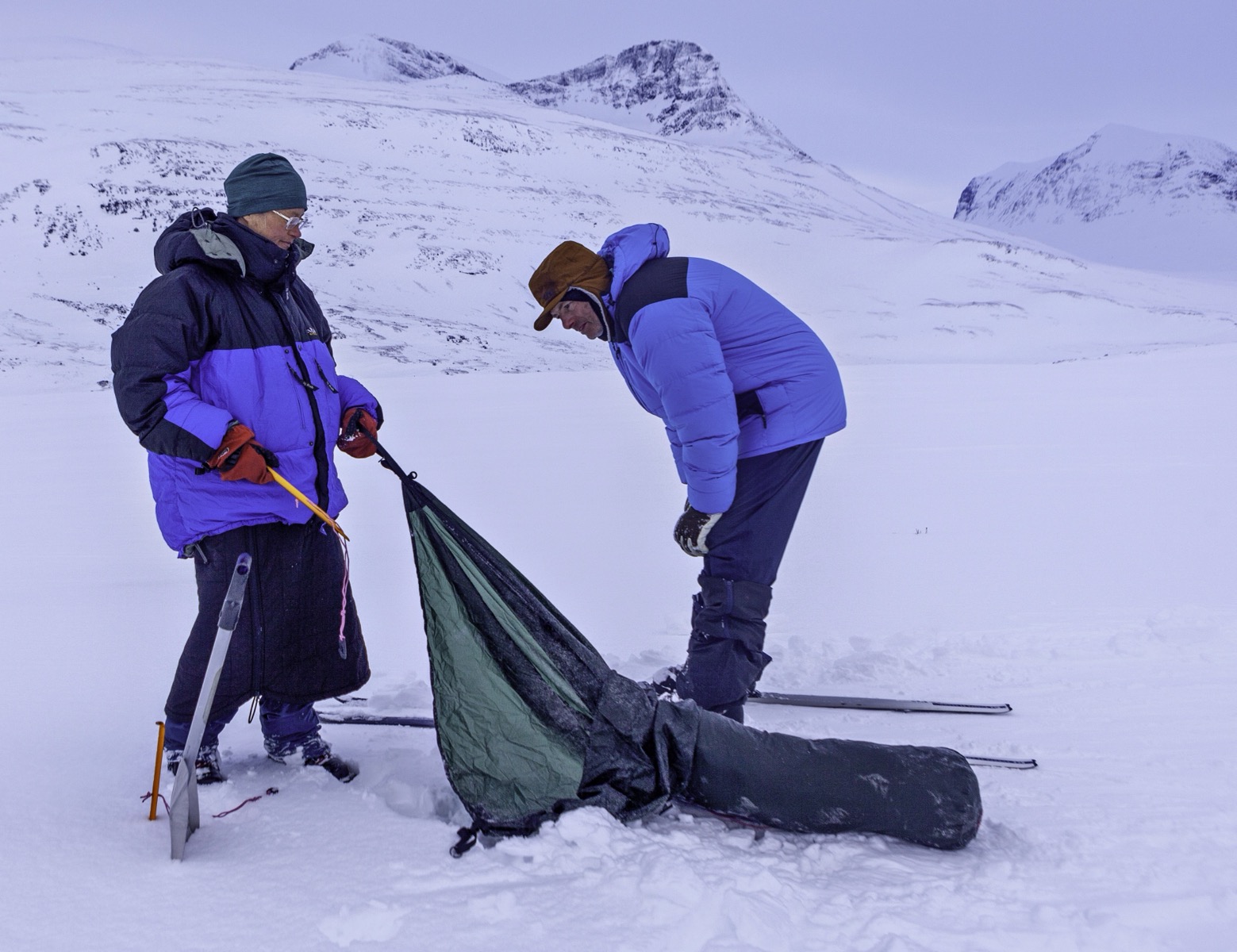
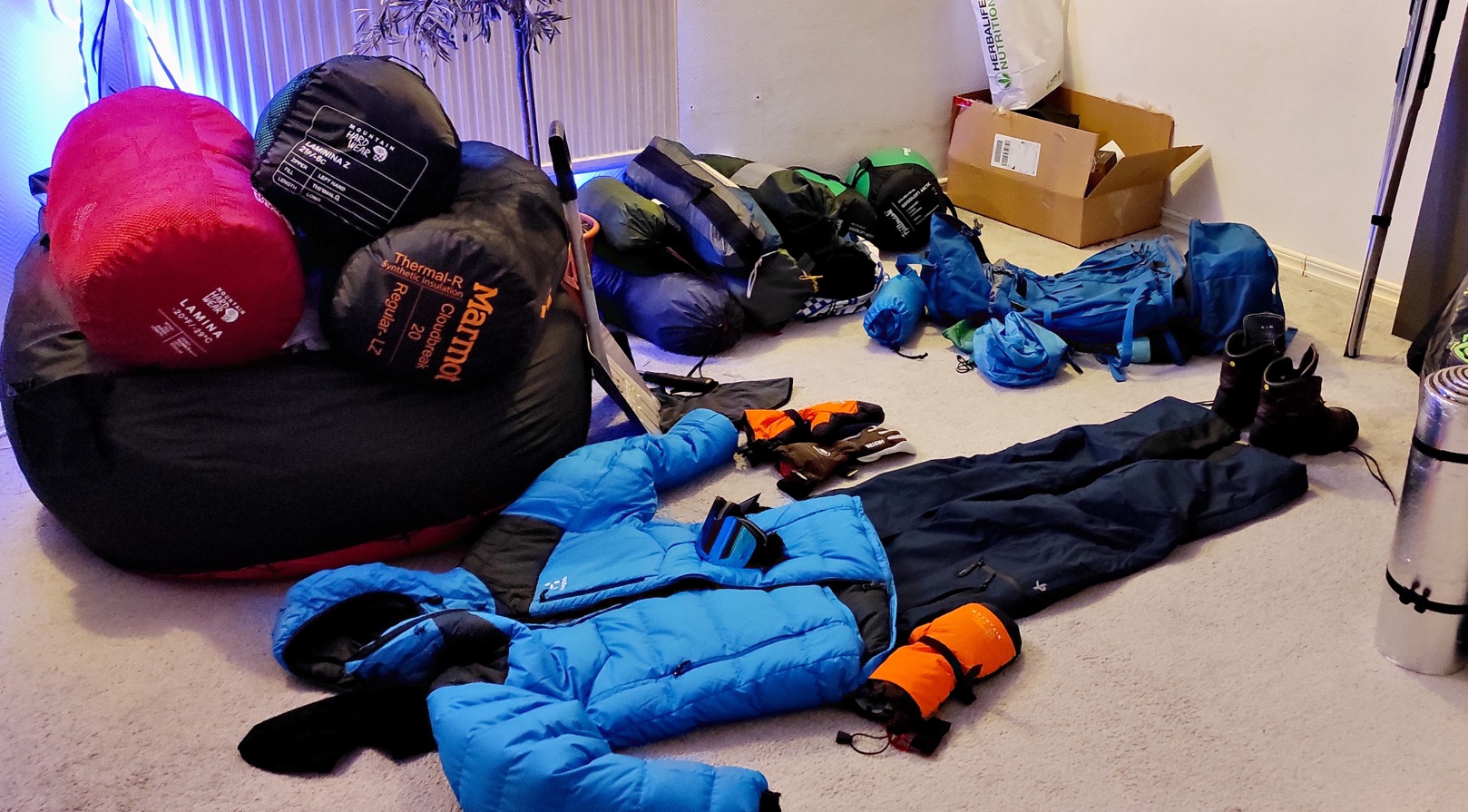
First, a few photos of the gear, but then I want to share my experience in a slightly different way...



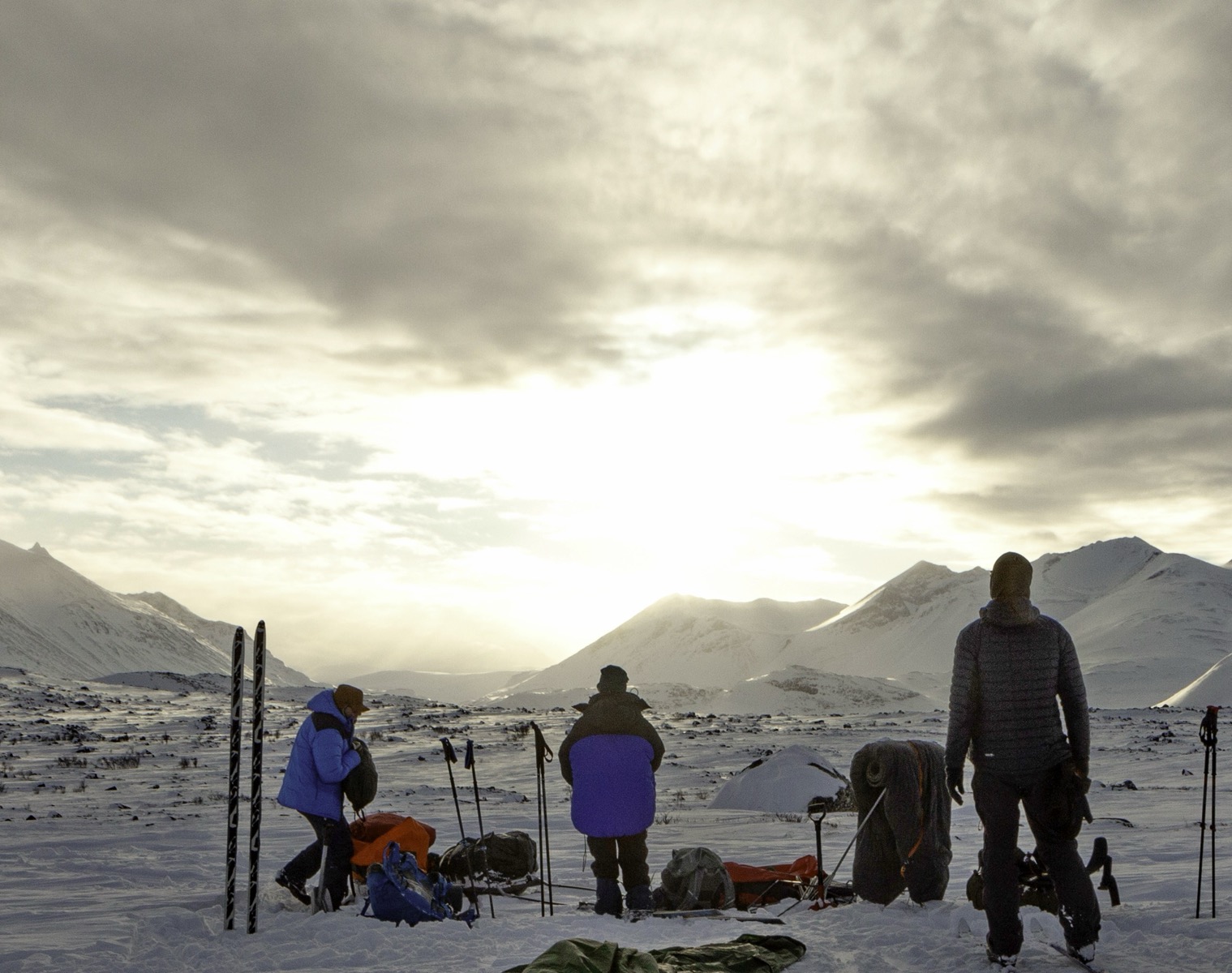
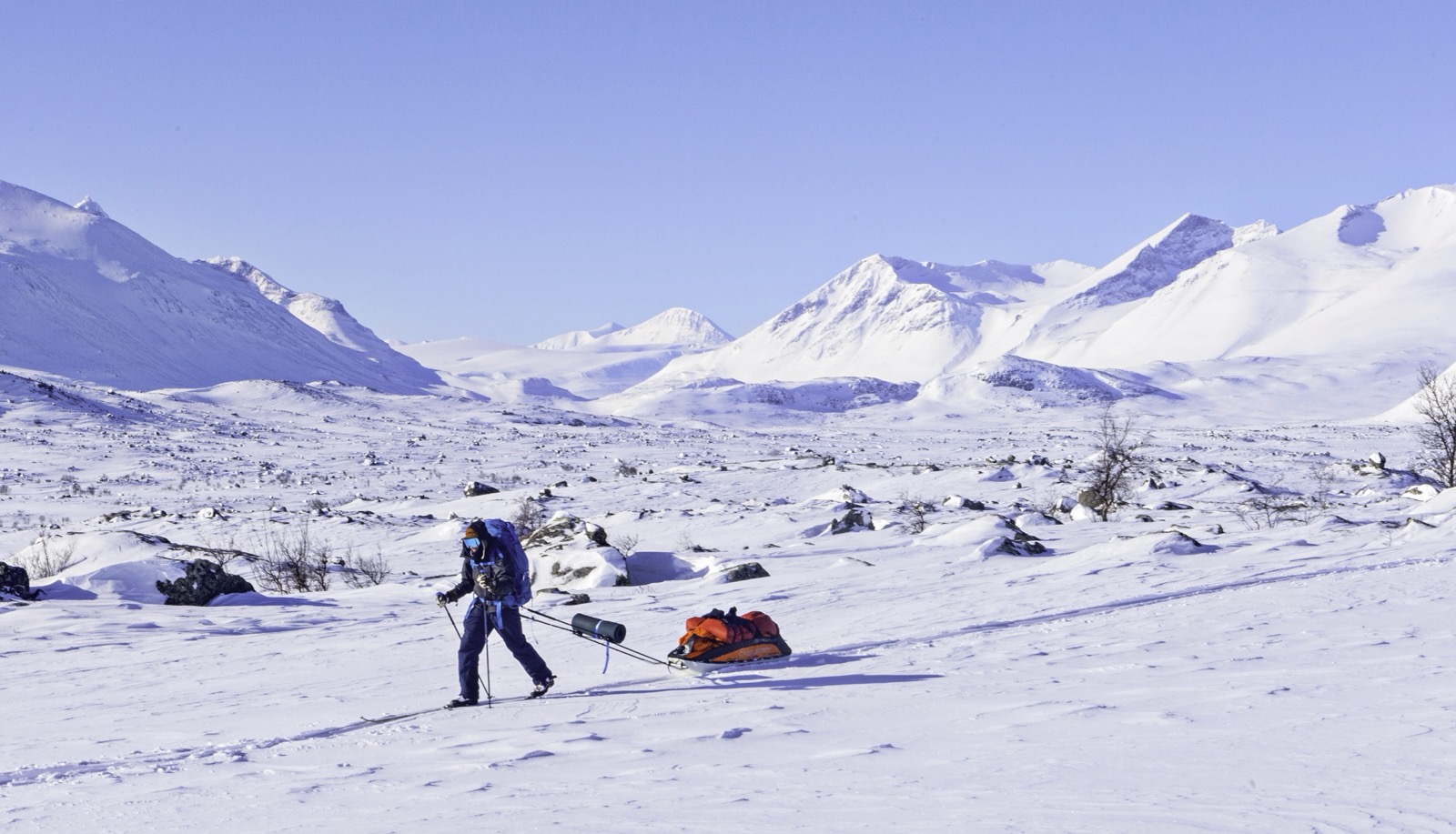
I’m going to share the story of this trip through a letter I wrote to the rest of the expedition team a few days after our adventure. I had just gotten home when I wrote this, so the memories were still very fresh, and the emotions from the experience were still vivid.
After a grueling train ride home from our adventure in Sarek—which ended with a 12-hour delay and our arrival home yesterday around 1 a.m.—I’ve had time today to process all the impressions and would therefore like to share how I experienced everything. As a complete novice both at skiing and at winter expeditions in general, the impressions are quite overwhelming. Since I had only hiked in the spring, summer, and fall before, the contrasts with what it means to be on an extreme winter trip were very stark. The fact that I had never skied before meant that my learning curve was steep in every way. I’ll try to describe a bit how I emotionally and mentally approached and experienced this.
My first arrival in Ritsem and our night camping outside the mountain station while waiting for all the participants gave me a sense of anticipation. Trying out the skis briefly during the day in the birch forest around the station immediately made me realize that this is not my natural element. It struck me that trying something for the first time here and knowing that in the coming days I would have to “live” on these skis would be the challenge of my life and would be incredibly tough—SO NOW IT’S SERIOUS. A new situation I really have no experience with. When Daniel, Ulfsson, and I settle into the tent outside the station, I can’t help but laugh out loud! The whole situation is pretty absurd. It dawns on me that everything about this situation is new to me as I lie there in my sleeping bag at minus 20 degrees Celsius, thinking: tomorrow is the day!
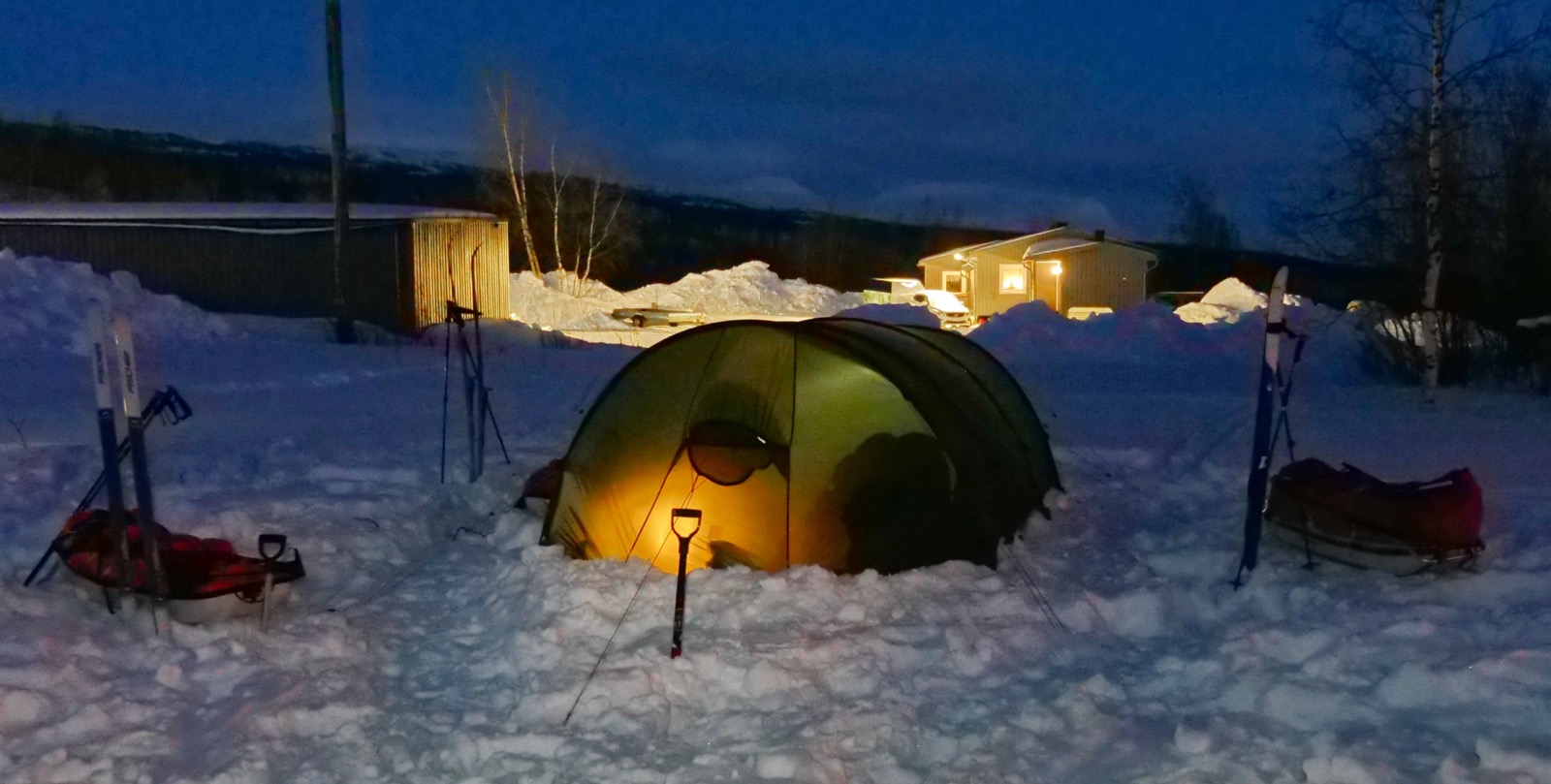
On the day we’re set to head out, one of the old-timers at the mountain station comes by and gives us a doomsday forecast for the weather that’s supposed to roll in during the afternoon, and it sounds like he really means that only a fool would dare to go skiing out in that. But it’s still sunny, and I think to myself… we’ll just have to see what happens. When we’re ready to head out, the wind starts to pick up, but I feel very safe with Daniel and Ulfsson as my guide and trainee. Most of the excitement comes from the fact that I’m actually out on my first winter adventure, complete with a sled and all!
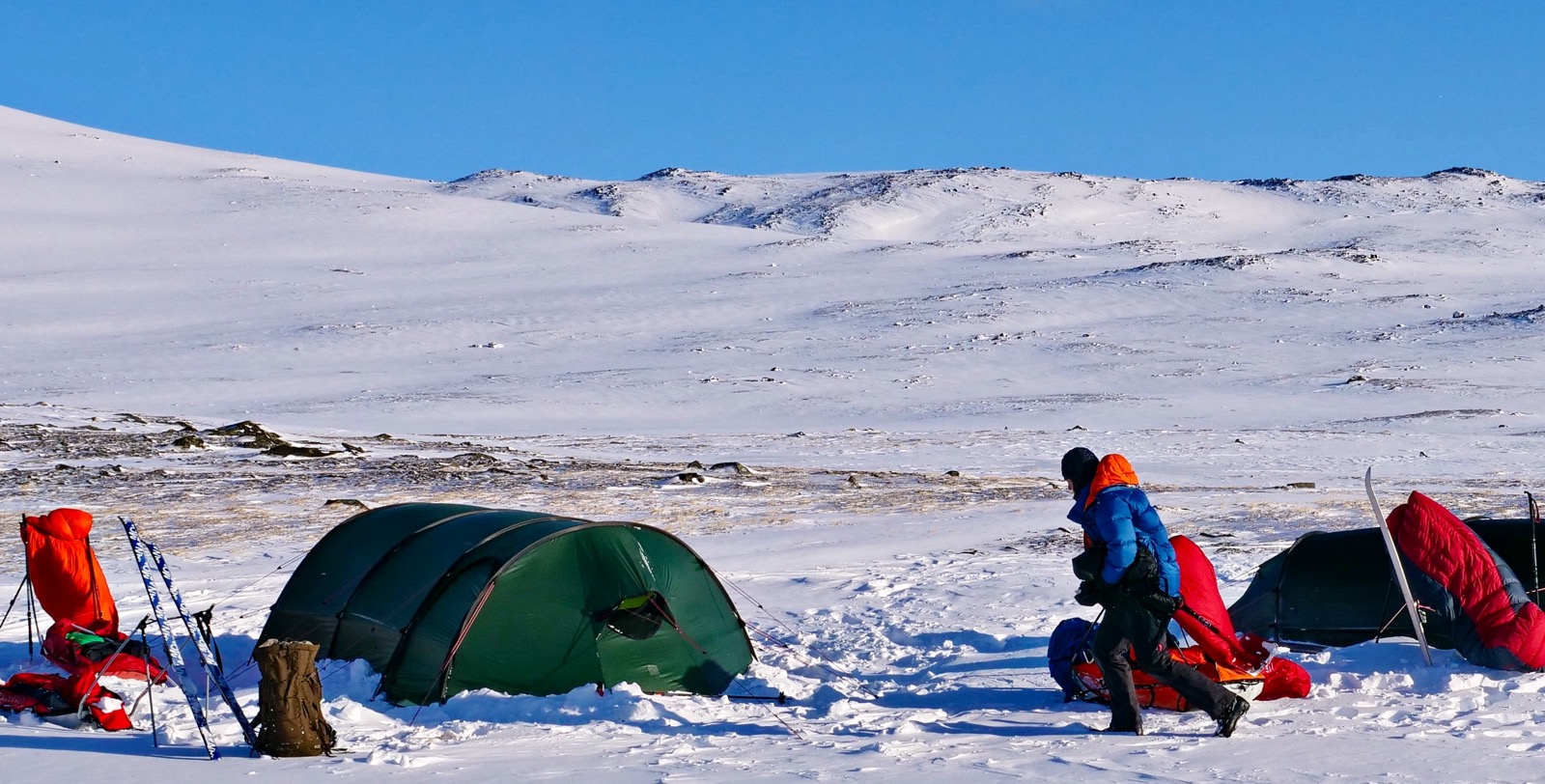
Once we’ve gone a few kilometers out onto the lake, the wind picks up significantly. I see the snow swirling over the ice and the crosswind tugging at my clothes and sled, but somehow it feels as if my ski goggles are a VR headset and as if I’m the main character in some action-adventure game. What a start to this adventure, I think to myself as I ski after the others. I get a little carried away and ask to go first for a while to feel what it’s like to just see the landscape ahead of me as if I were alone. I think I’m getting a little high on the feeling that this is absolutely incredible—now it’s really happening. Setting up the first camp with Åsa in strong winds but somewhat sheltered by the birch forest and the hills was fun. Soon, however, I would realize just how much work it takes to keep things in order and do everything needed at camp to make it work.
13KM
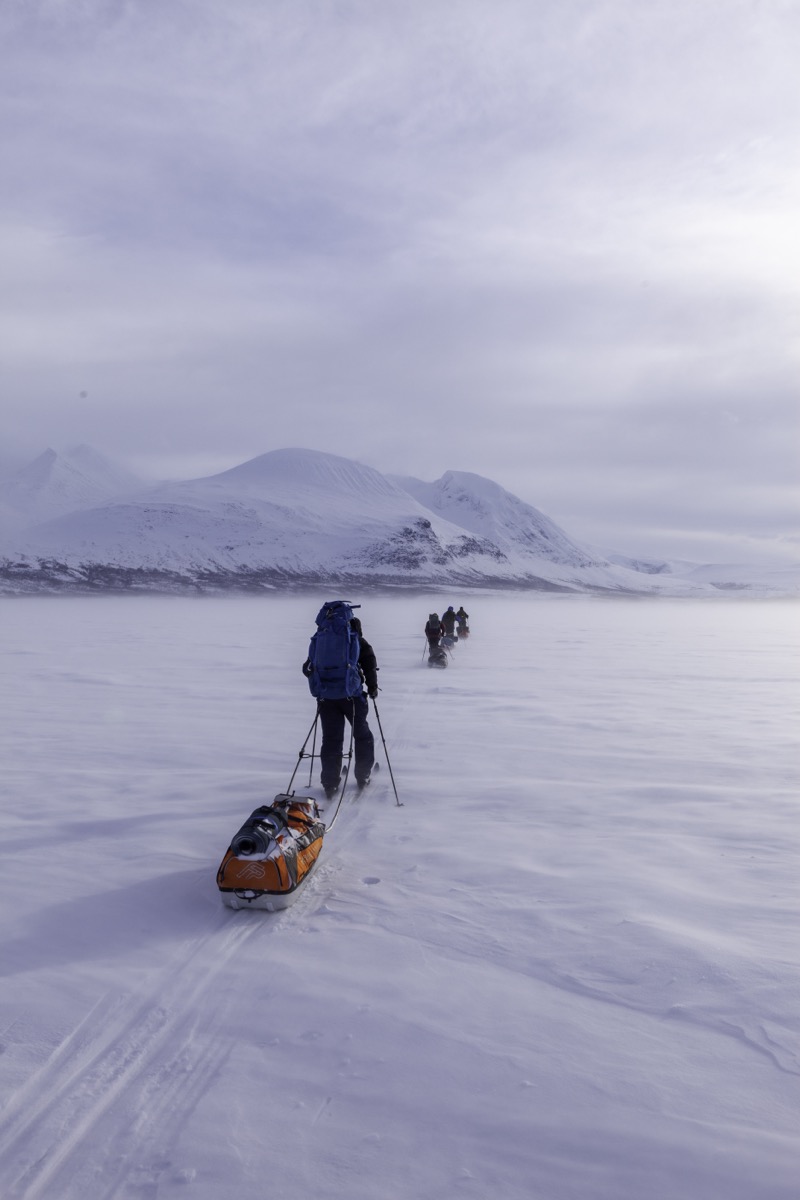
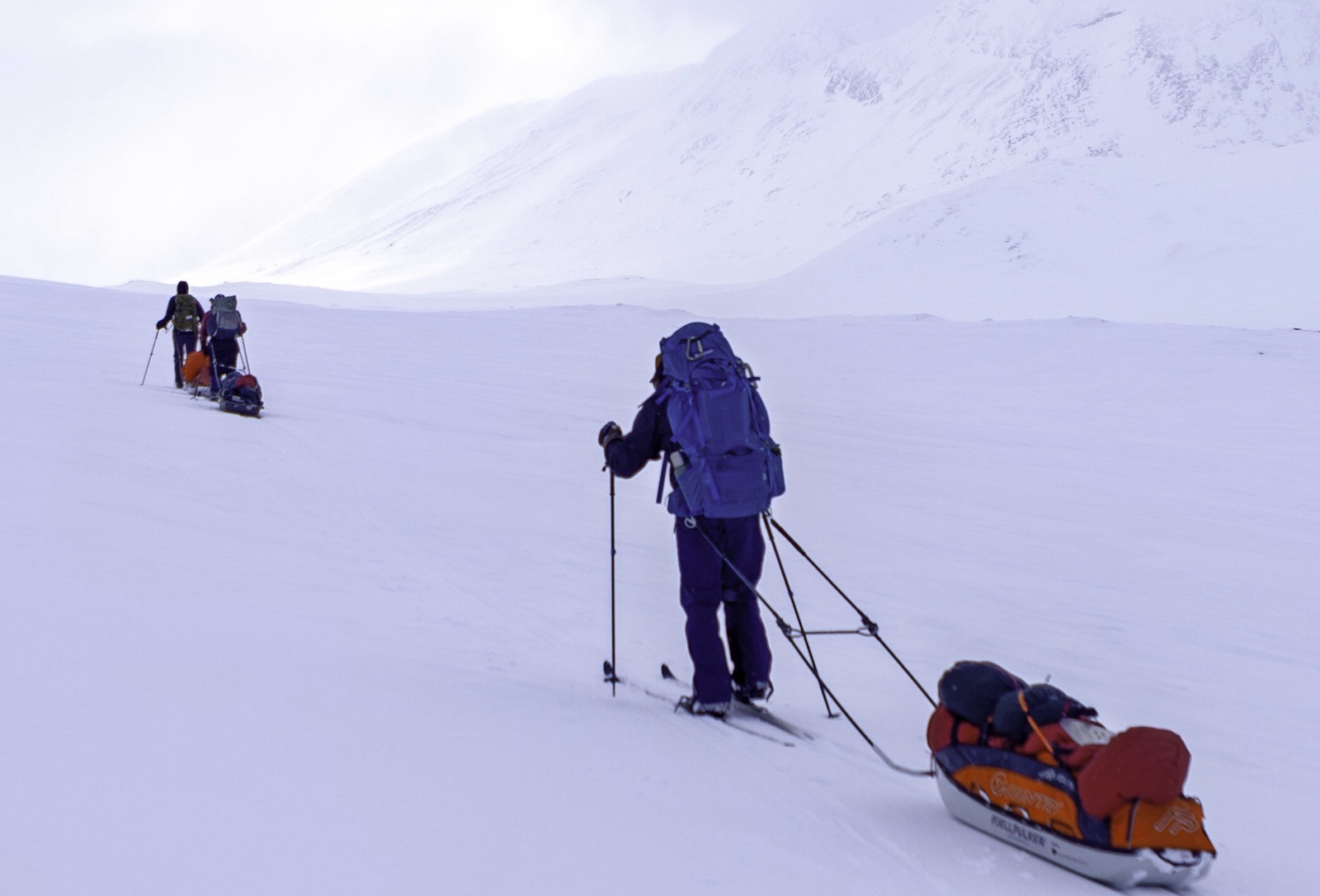
On the morning of the second day, I find out that Tina plans to drop out, and I have to say I think she was both brave and wise to make the right decision for herself in time. It’s steep when we set off, and I have to struggle to make my way with the sled. Mentally, I enjoy the challenge, but I understand that this is really, really hard work to get through. The highlight is also a hill where we have to take off our skis and work together in groups of two or three on each sled to push them up a couple hundred meters. It’s incredibly heavy, and it probably takes us a couple of hours to zigzag our way up this unbelievably steep slope with the sleds. This is probably one of the toughest moments, both physically and mentally, and it really sets the tone for what’s to come.
11KM
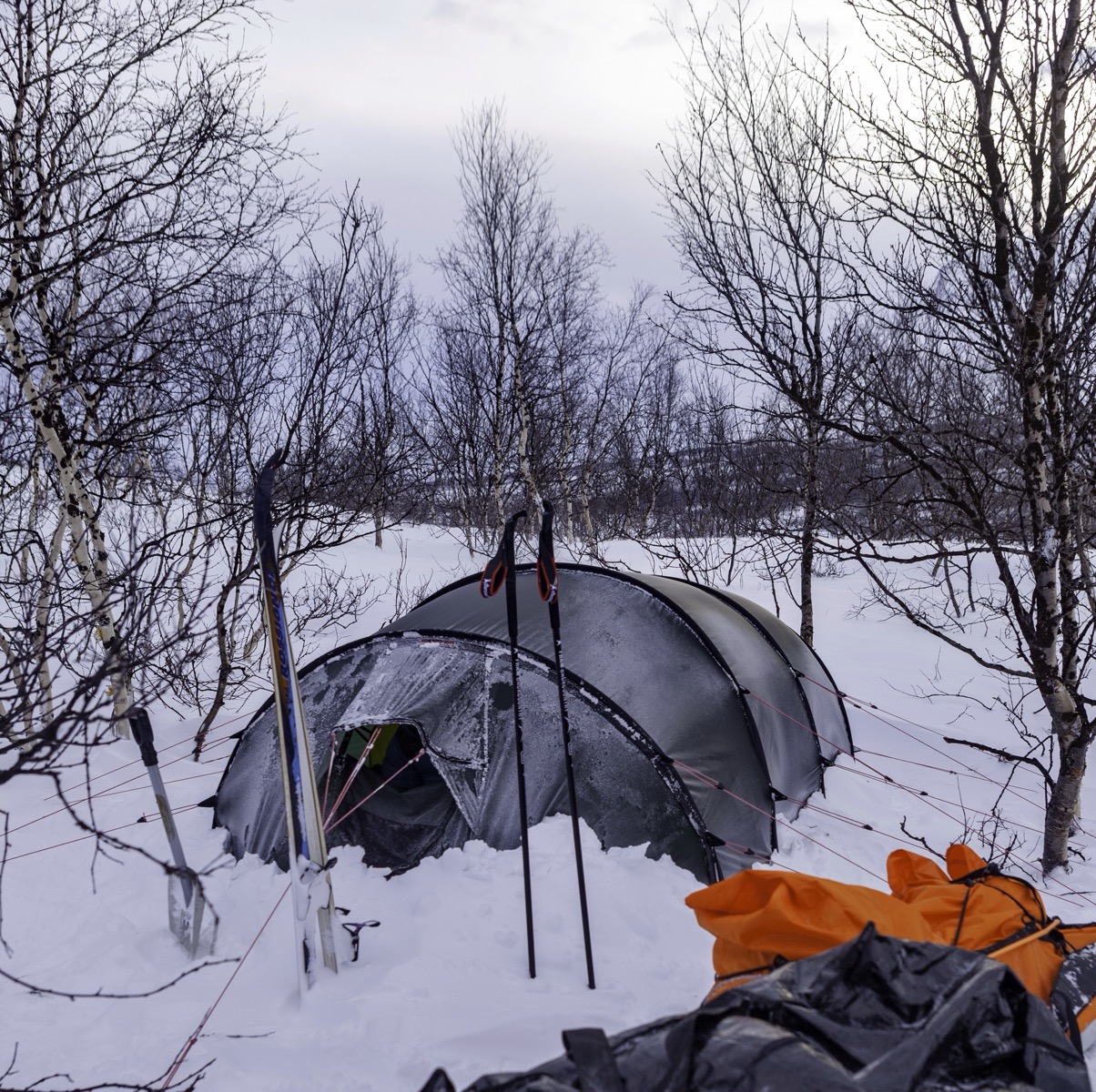
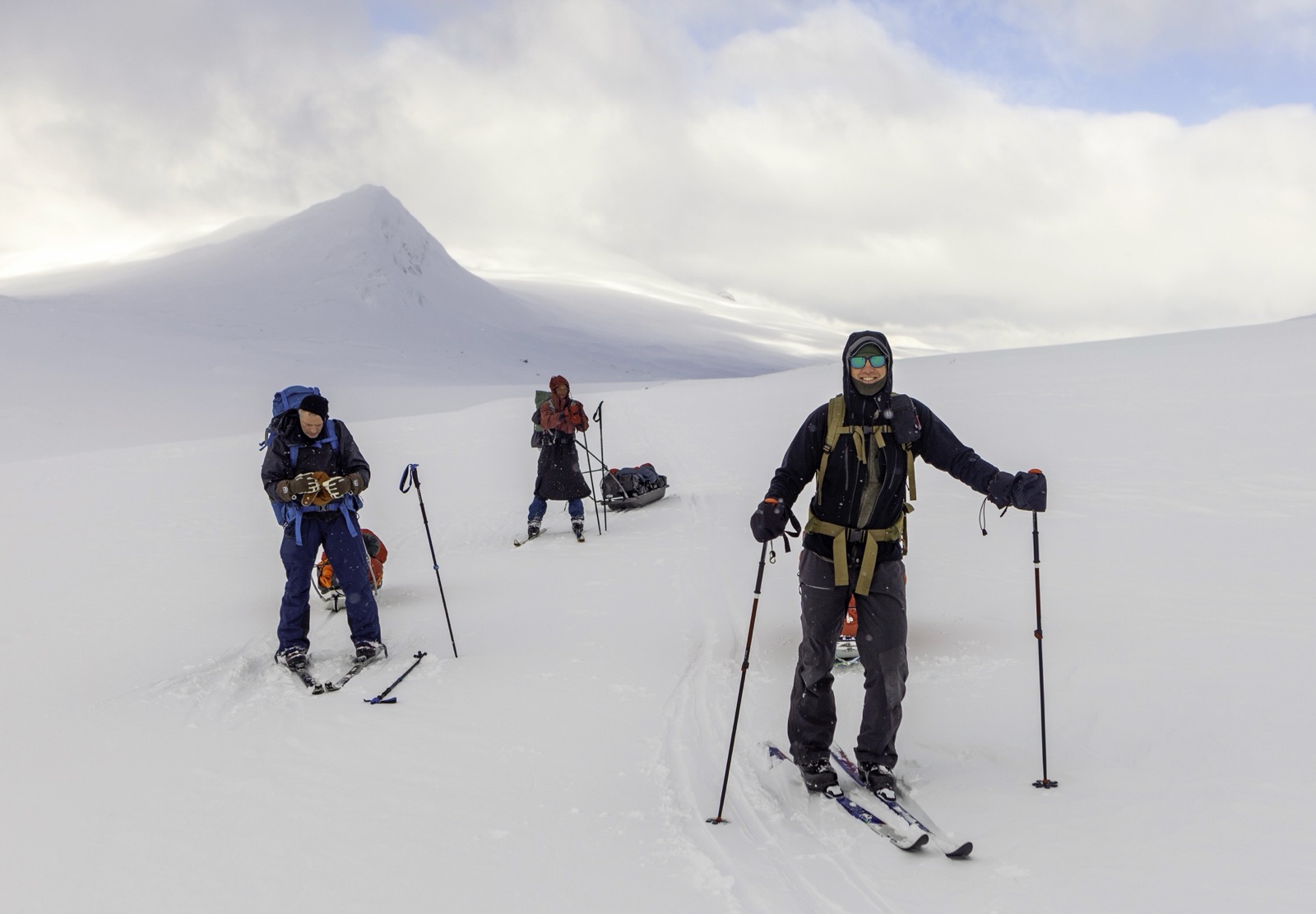
The third day is also grueling as we ski into a headwind that picks up considerably. I remember feeling the cold. In the early afternoon, it feels like a “war movie” with snowstorms obscuring everything around us but finding their way into every nook and cranny of our backpacks and sleds. Daniel makes the wise decision to cut short today’s stage and try to find a better spot so we can set up the tents before conditions potentially become dangerous. As we set up the tents, the wind and snow are howling all around us, and we have to work frantically to secure the storm lines so everything doesn’t just blow away. This experience of setting up a tent in what I can best describe as a full-blown storm is very powerful for me. I realize that a successful winter trip also depends a lot on making the right decisions in time. The wind chill bites through my down jacket and gloves, so it’s nice to get inside the tent after what was, for me, a chaotic but still positive experience. I felt inspired that we actually managed to set up the tents despite these conditions. And that the right decisions are made in critical situations by the person with the most experience.
9KM

The fourth day is “whiteout day.” It's snowing, and we're skiing through pretty heavy conditions with deep snow. My feet and hands are starting to have a hard time staying warm, partly because my boots got soaked on the second day when we were hauling the sleds uphill. A lot of snow got into them then, and they’re like two bricks that are hard to warm up even with Nalgene bottles inside in the mornings. Now I’m starting to feel it in my feet, and the heel of one foot is starting to ache—it’s taken a beating because the boot takes so long to warm up. As we make our way between hills and ravines, I realize how difficult it is to navigate this landscape. Daniel has a lot of experience, and we’re getting around well in these difficult conditions, but at one point when he’s breaking trail (skiing first in line), he misses a low “drop” of just over a meter and disappears into the snow in front of us. You really couldn’t see the outline of the edge since everything ahead blends together like a white fog. The sky and the snow ahead are the same color, and it’s impossible to tell from a distance whether the terrain is uphill, downhill, or flat.
The rest of us tiptoe toward the edge a bit slowly and see Daniel waving a ski to signal that everything is okay. Now it’s our turn to try to get down a bit more gracefully. Åsa takes a little run-up but rolls over and the sled tips over. It’s my turn, and I think, “It’s do or die now,” as I take a few aggressive pole strokes forward over the edge, throw myself out, and somehow manage to bring the sled with me as I land on my skis without tipping over. As we’re about to move on, we realize that a shackle on Åsa’s sled has come loose and broken, and now we have to repair it somehow. Ulfson pulls out a rope and I grab a multitool, and Daniel gets to work tying together a temporary fix. It would turn out to be good enough to last the entire trip. I think to myself about how small the margins are when you’re so far out and your equipment can break. It can be devastating. So being prepared with some repair gear and knowing how to fix things can be absolutely crucial for getting out of a difficult situation. We make up for the kilometers we lost the day before, and it seems that we will pass the “point of no return,” where it’s farther to turn back than to continue forward. I don’t really remember this camp; it all blurs together a bit in my memory. Probably because I was now noticeably tired and worn out.
17KM
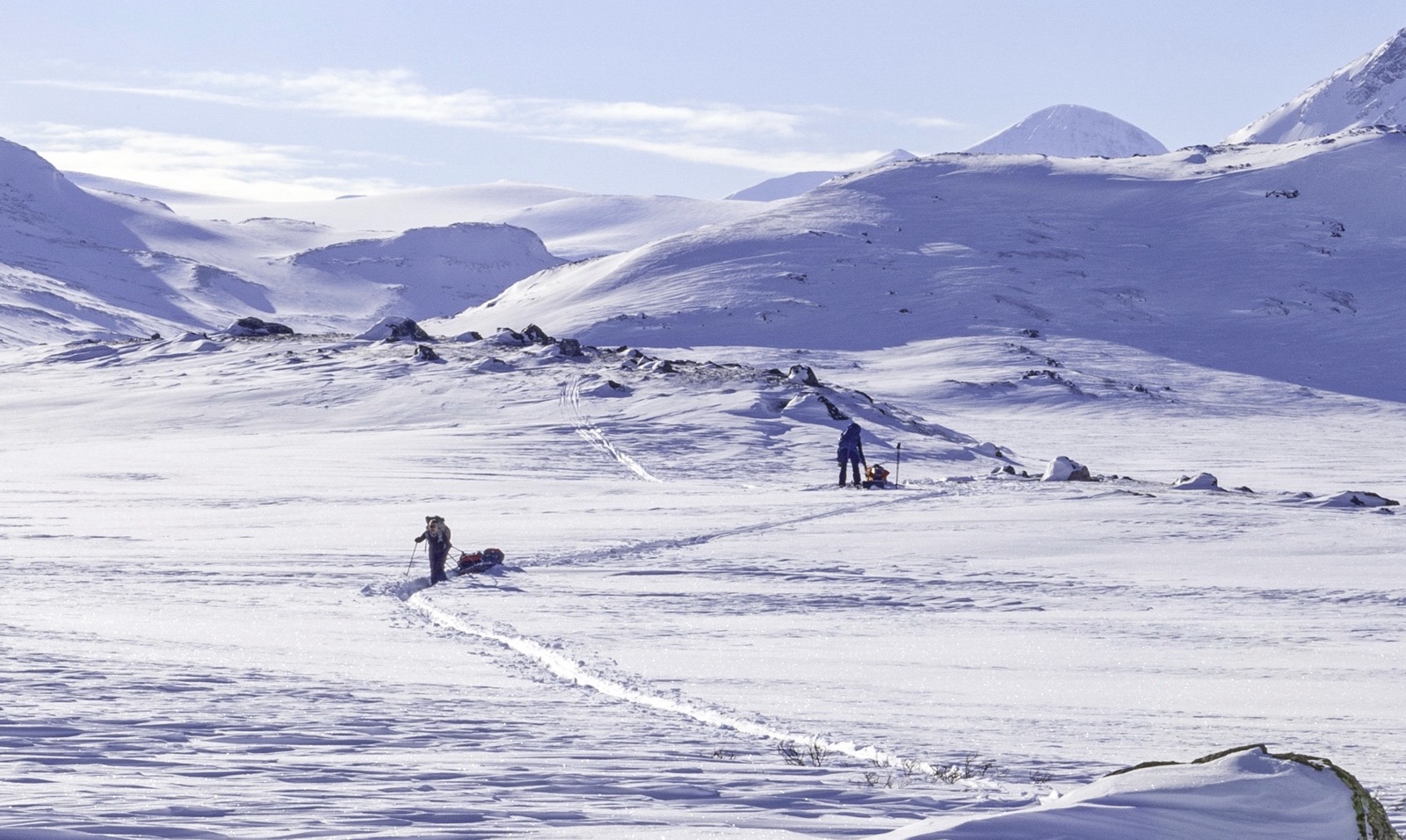
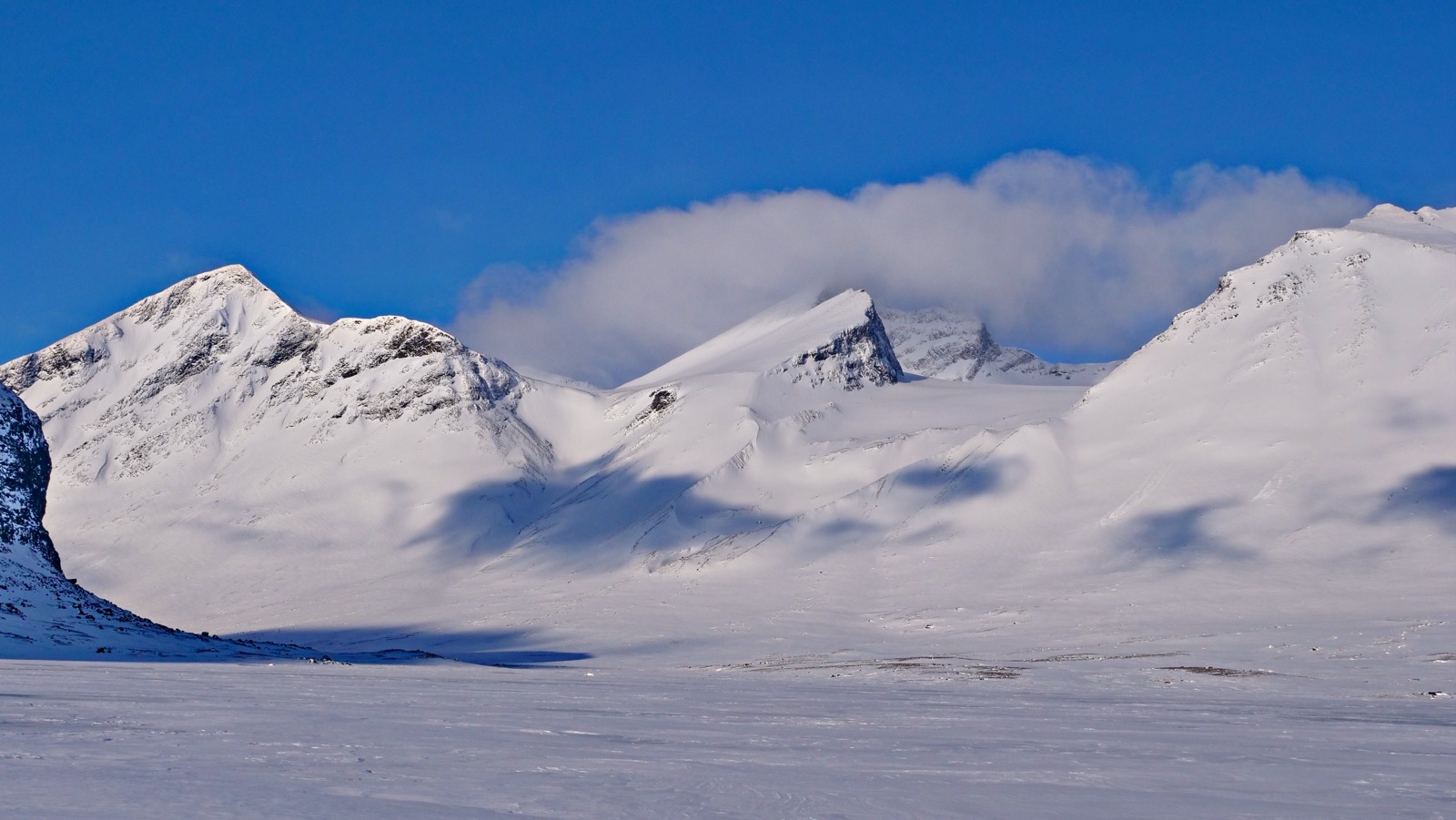
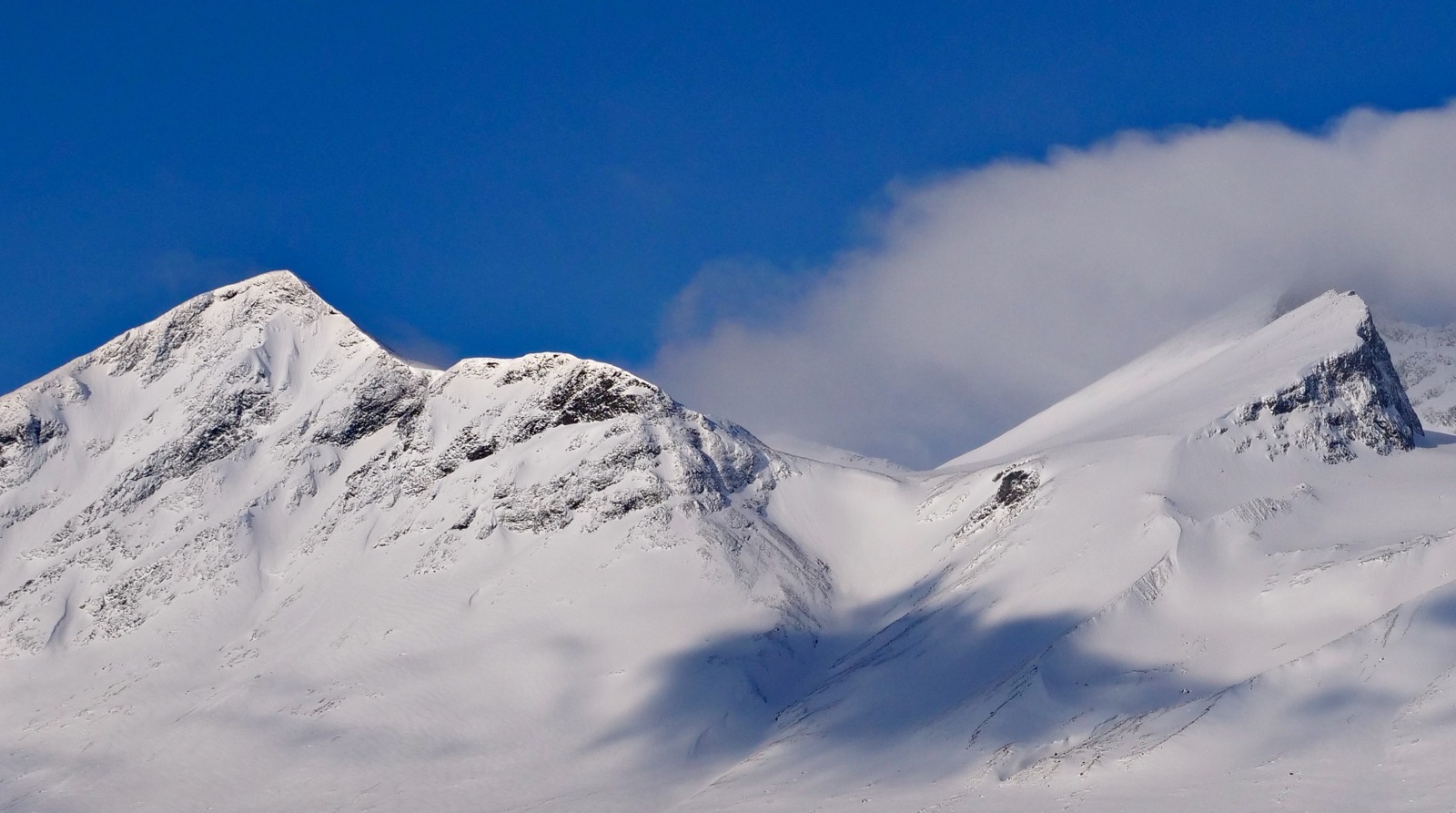
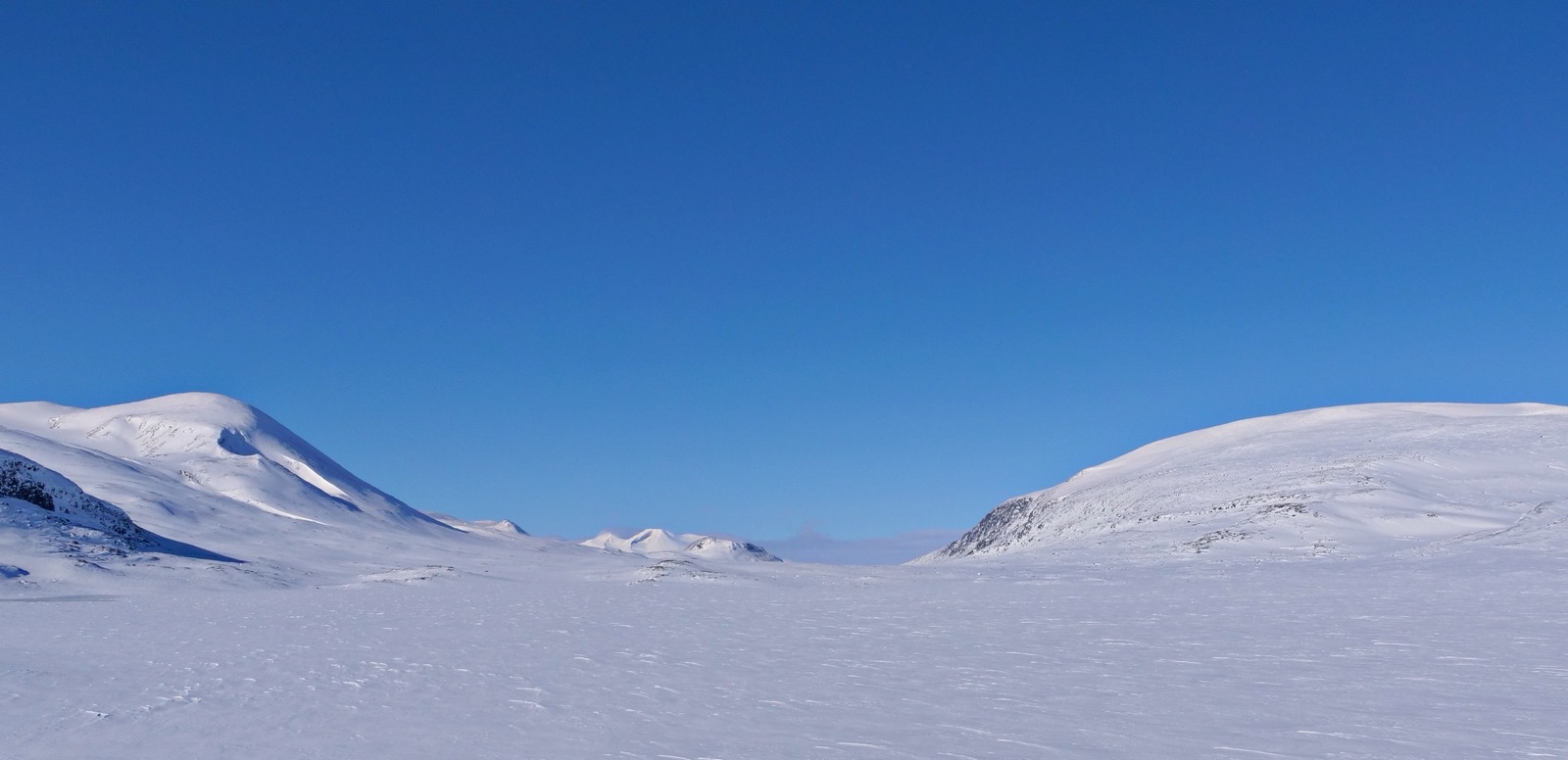
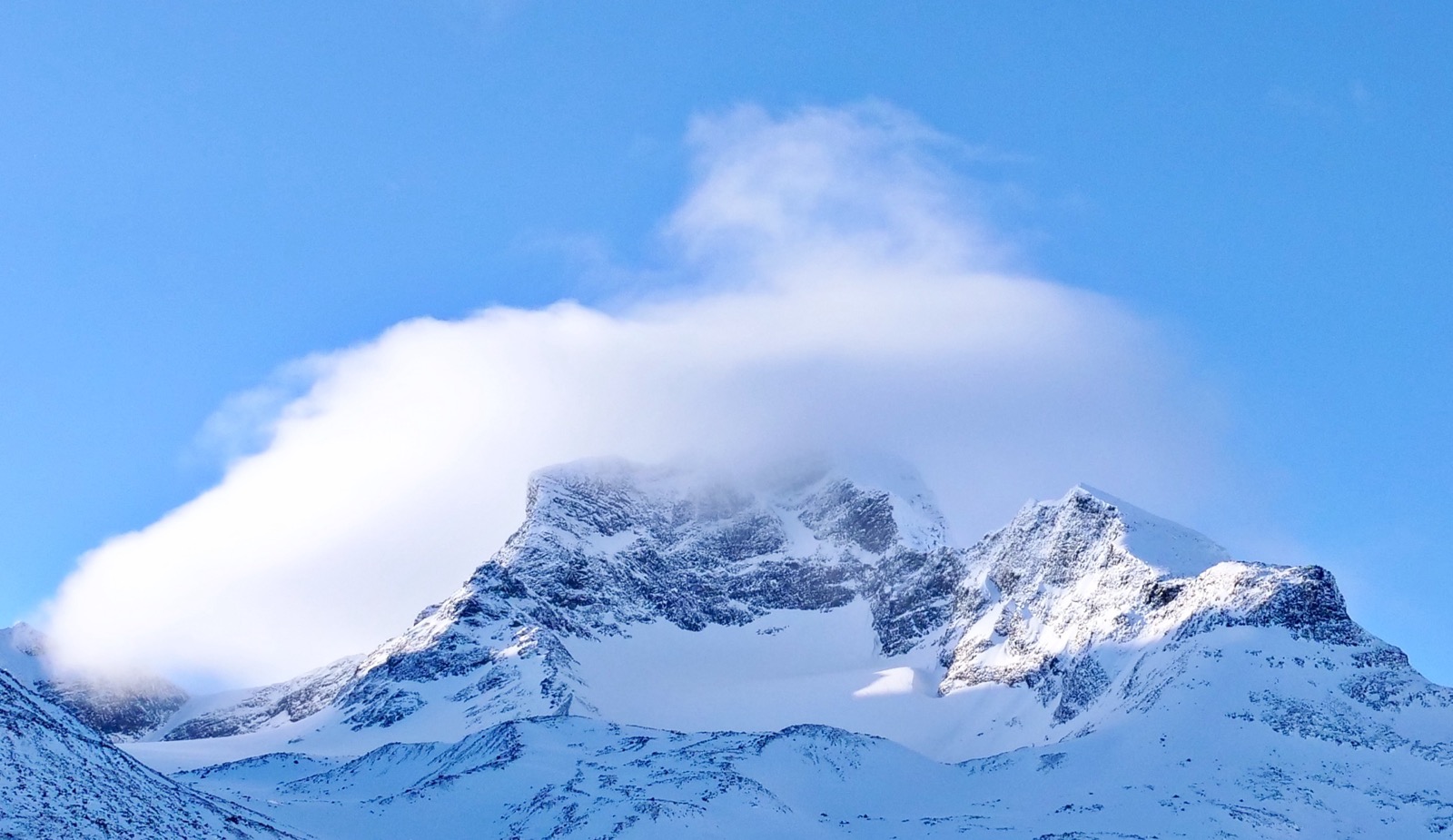
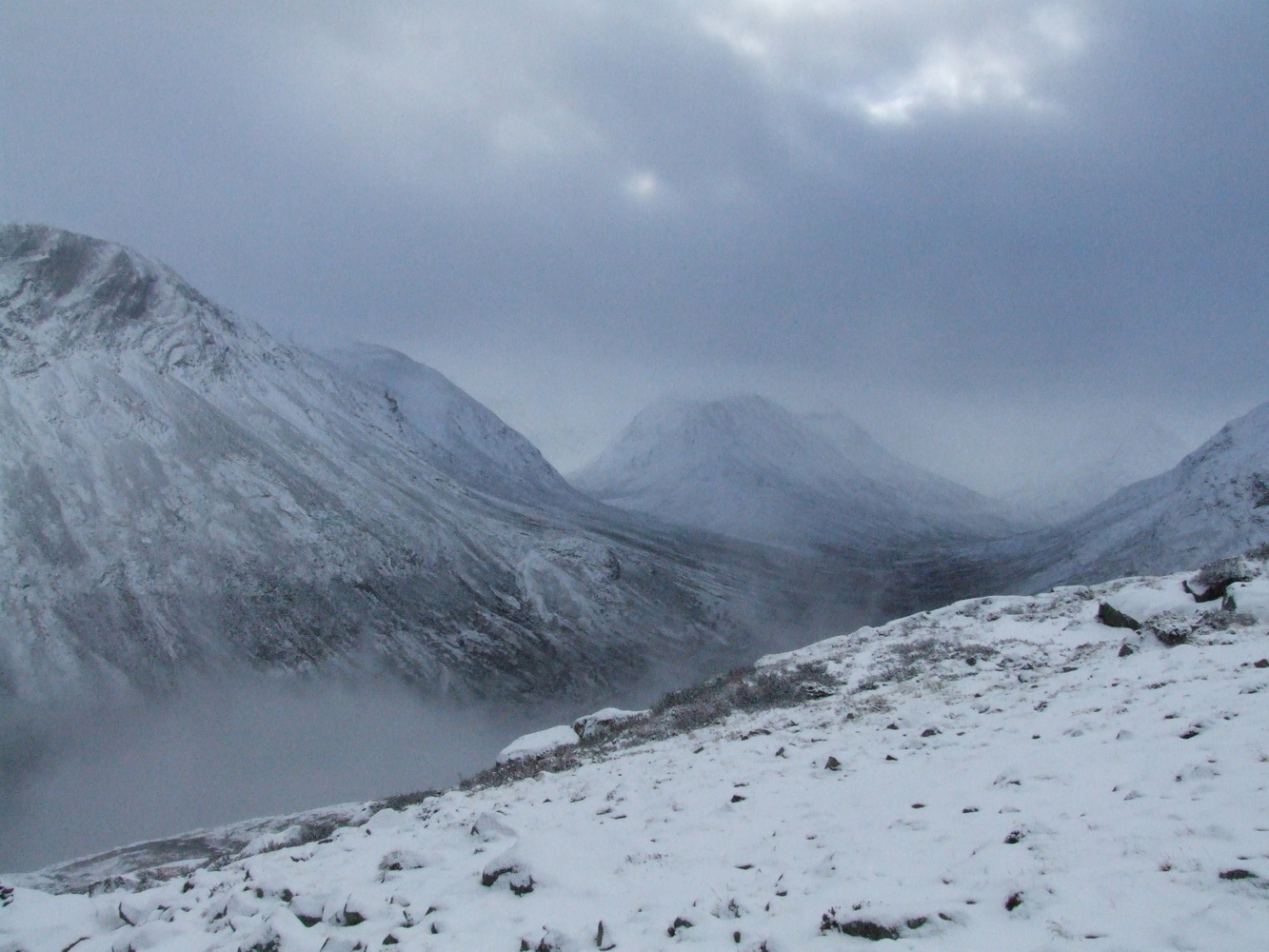
On the fifth day, we ski into the lakes nestled between the high mountains, and the atmosphere feels almost eerie. “Mordor” comes to mind as a metaphor for the landscape, and I think it could almost be another planet. We have a hard time finding enough snow to set up camp, as the landscape ahead of us is icy and barren. We end up skiing past our intended campsite to find a snowdrift that we deem good enough to drive in snow anchors and dig a snow pit.
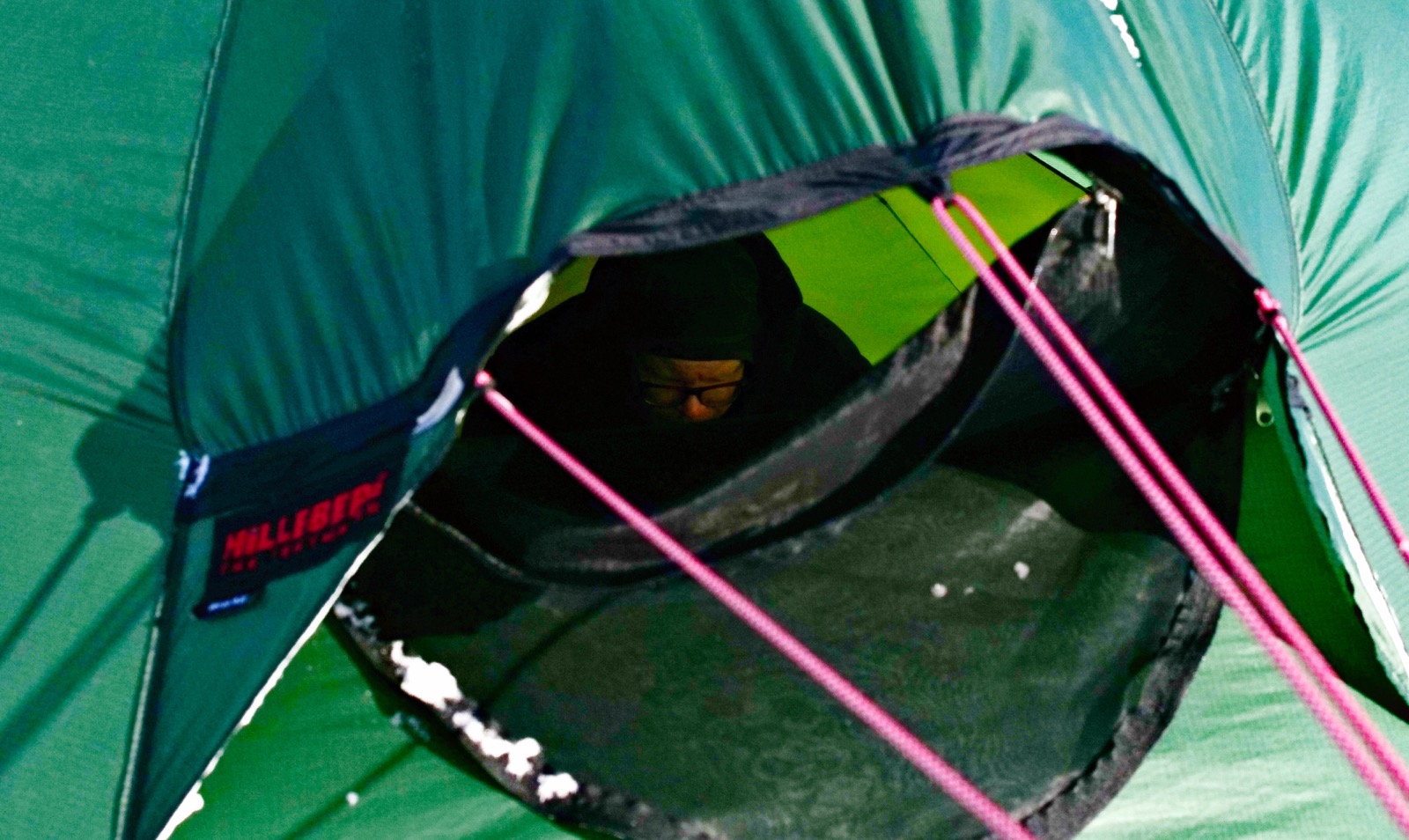
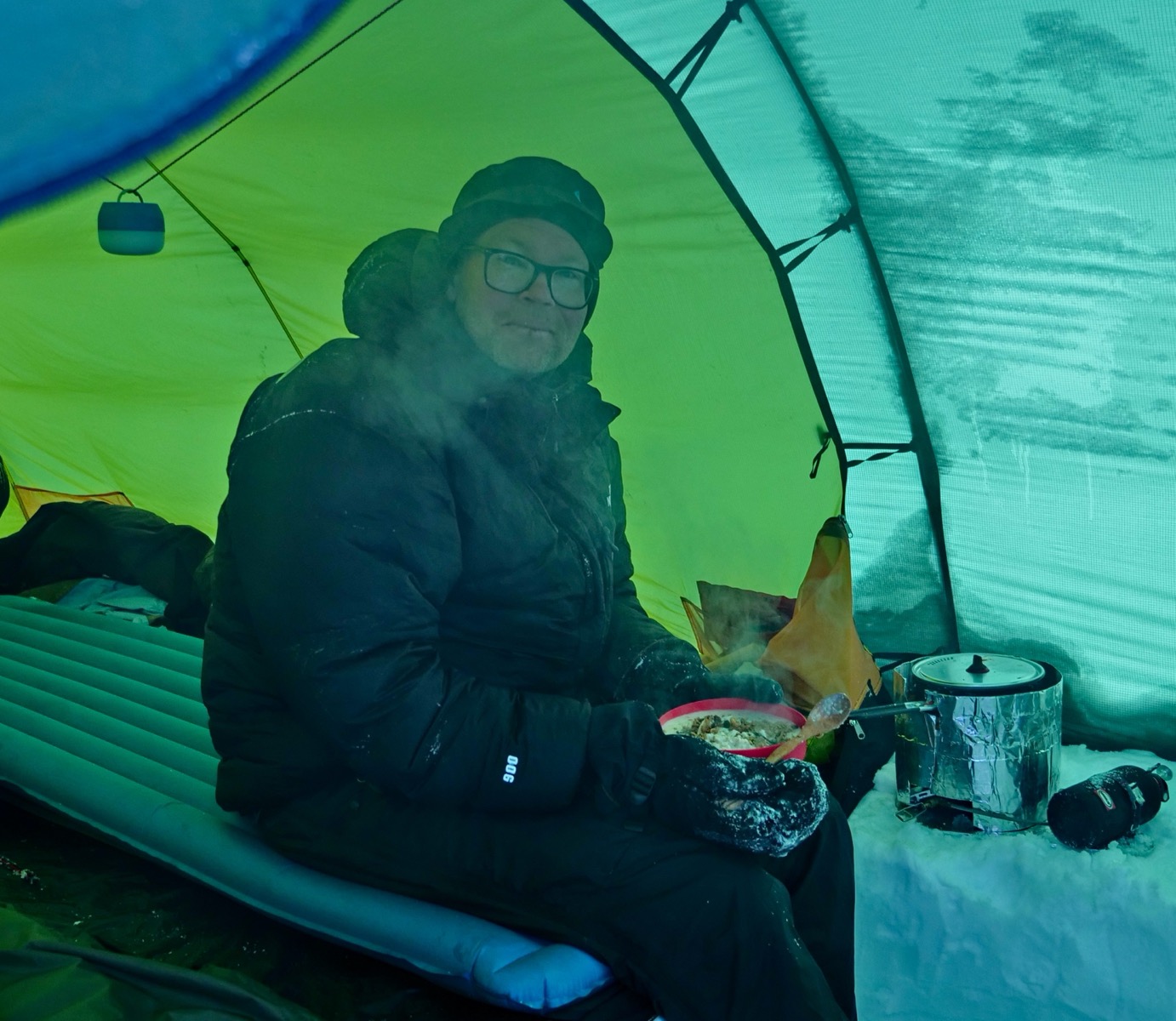
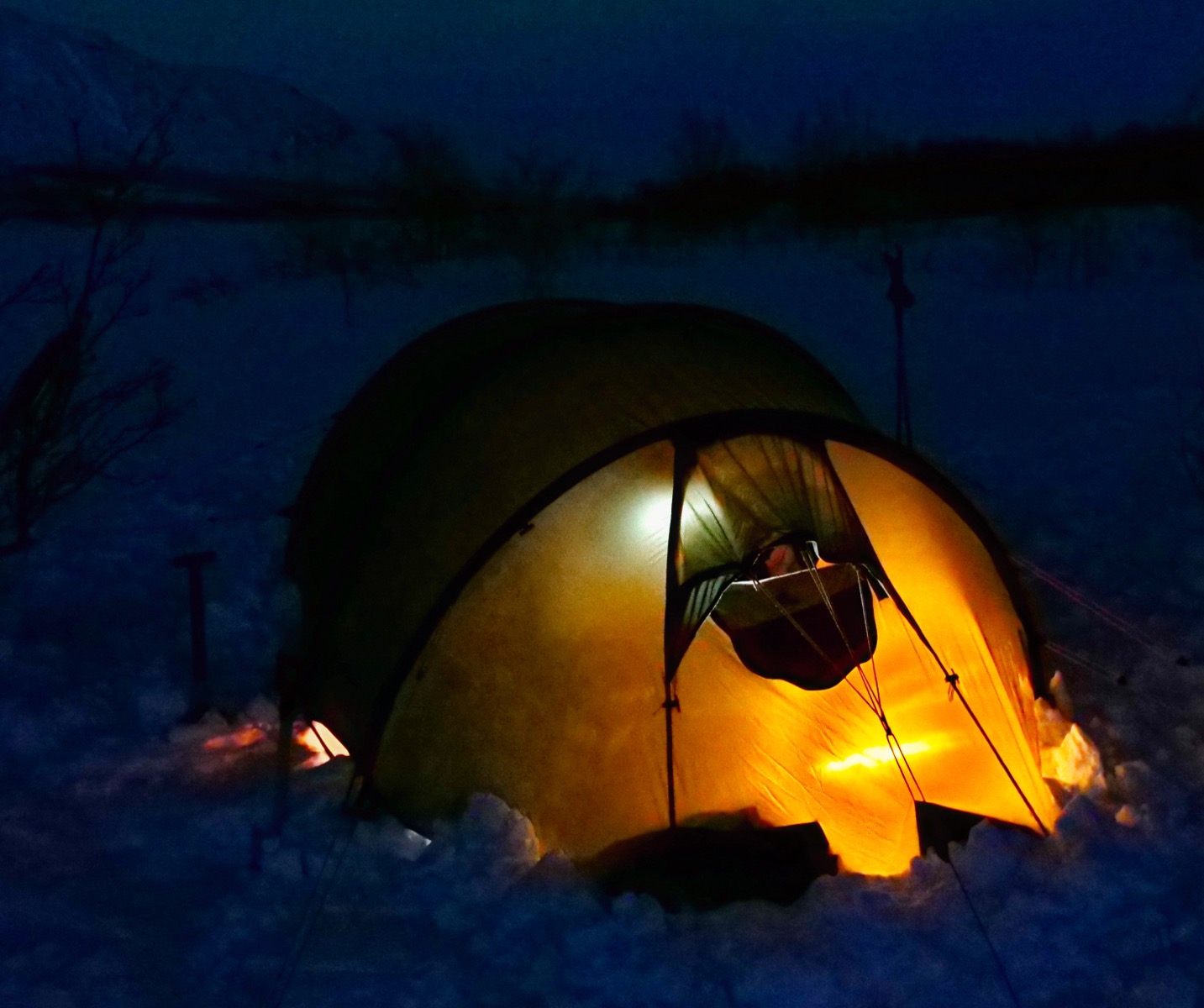
A few general thoughts on camping. Before this winter trip, I hadn’t realized how tough it would be to stay at camp and make it work. For example, melting snow both morning and evening for drinking water, food, tomorrow’s thermos of blueberry soup, and so on. It was something new for me to have to spend several hours both morning and evening melting all the water we needed. It was a constant effort to keep the stove running smoothly and adjust fuel usage correctly. I won’t go into all the details, but I can simply say that this part of the trip was overwhelming for me. Routines for optimizing kitchen use are essential for the camp to run smoothly. If food and warmth (the bottles used to warm clothes, sleeping bags, etc.) are taken care of, it’s much easier to free up time for all the other things that are tough enough on their own. Or just changing clothes at the right time. Or visits to the toilet. Yes, just to be able to get out of the tent at all and take some pictures or gaze at the wonderful sky, which, when I finally had a little time, left me completely speechless. The stars were so beautiful! Camping was the big challenge; even though I didn’t have an easy time with the skiing, it just required a lot of grit. But in and around the tent, it’s a constant process of preparing the next item that needs to be taken out of a bag and used, only to be put away again so you don’t end up with total gear chaos.
13KM
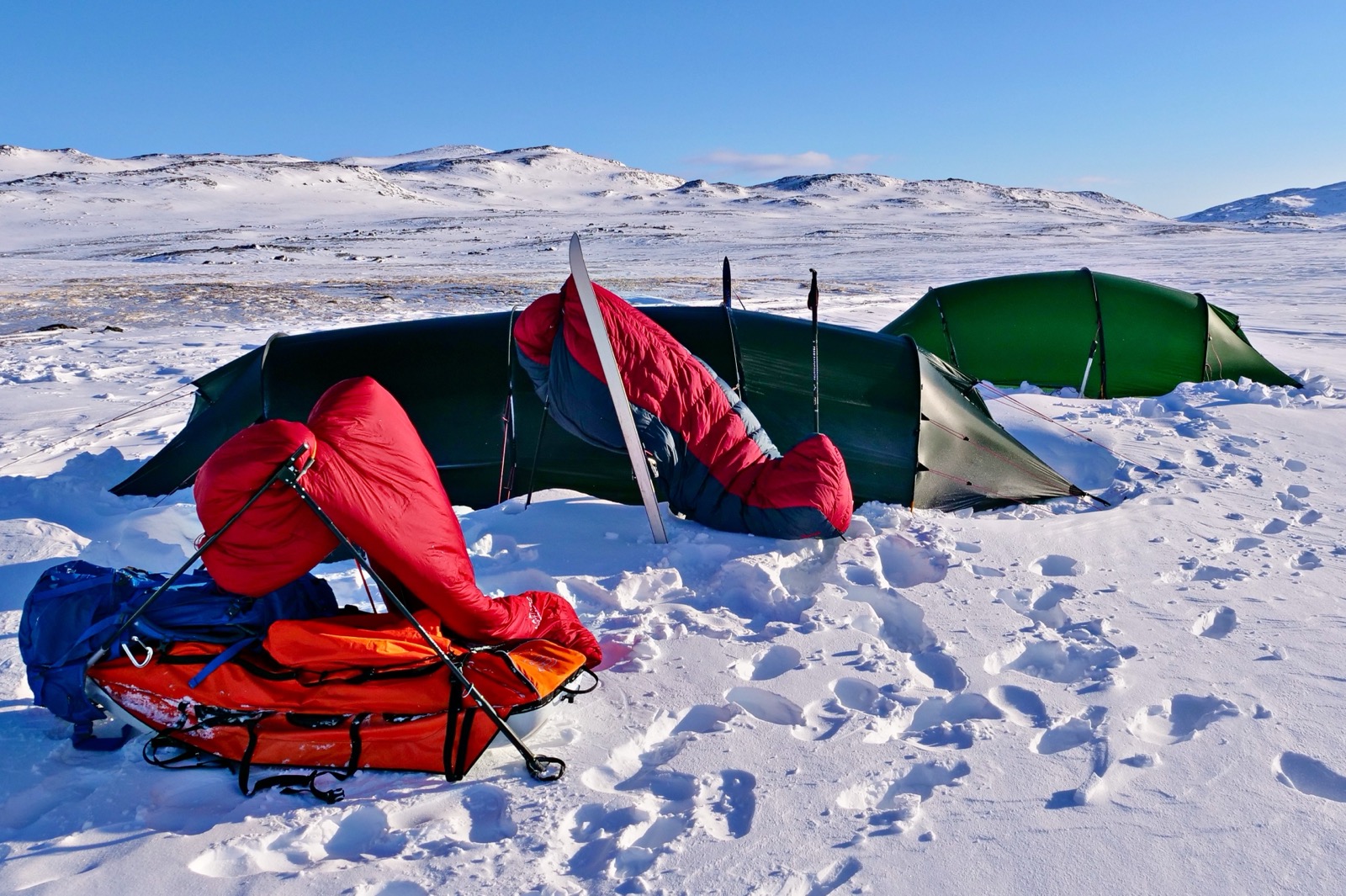
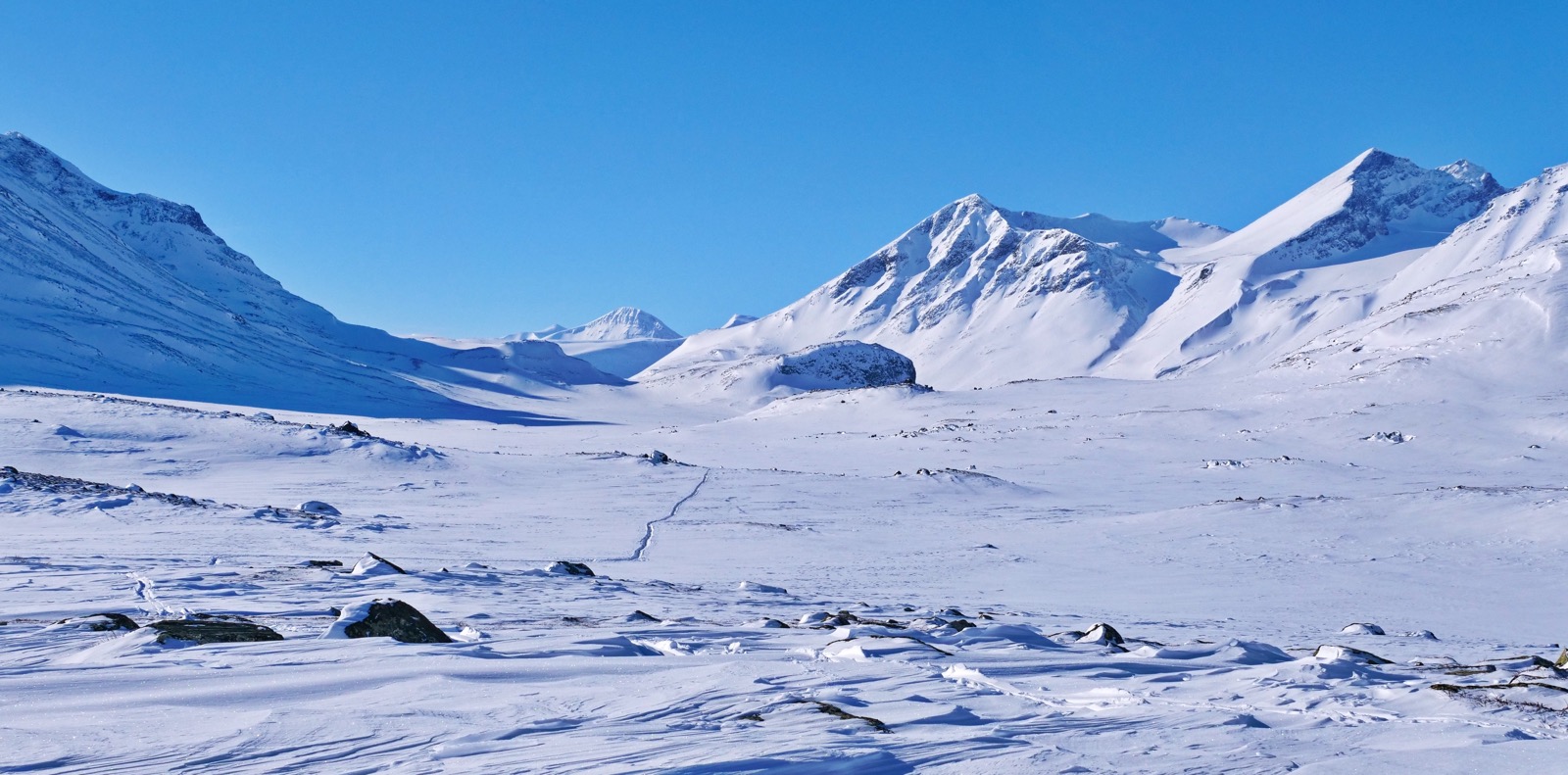
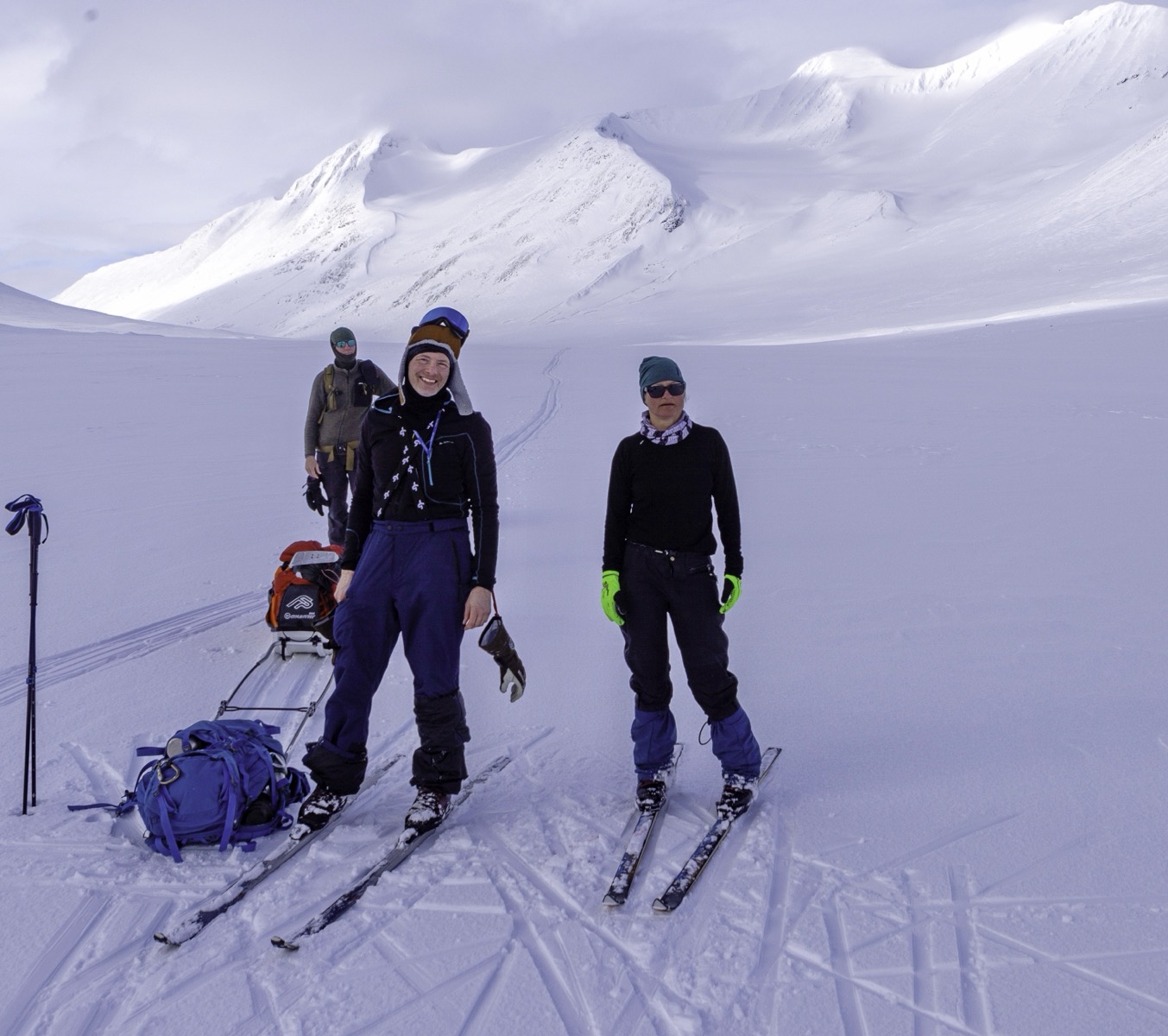
It’s the sixth day, and the weather is showing its best. Suddenly, it’s completely calm and sunny. It feels as though the mountains have tested us enough and are now rewarding our souls with stillness and peace. Unfortunately, I twisted my back while using the toilet and I get the feeling that now I’ll have to struggle with it to get out there and reach the finish line. With a little Alvedon and Voltaren cream on my back, plus a booster medication of some unknown kind that Ulfson gave me, it’ll work out anyway. When I’m skiing, it doesn’t hurt that much, but when I move and twist, it really stings. Unfortunately, it takes away some of the joy of the day, which is otherwise so beautiful and peaceful.
11KM
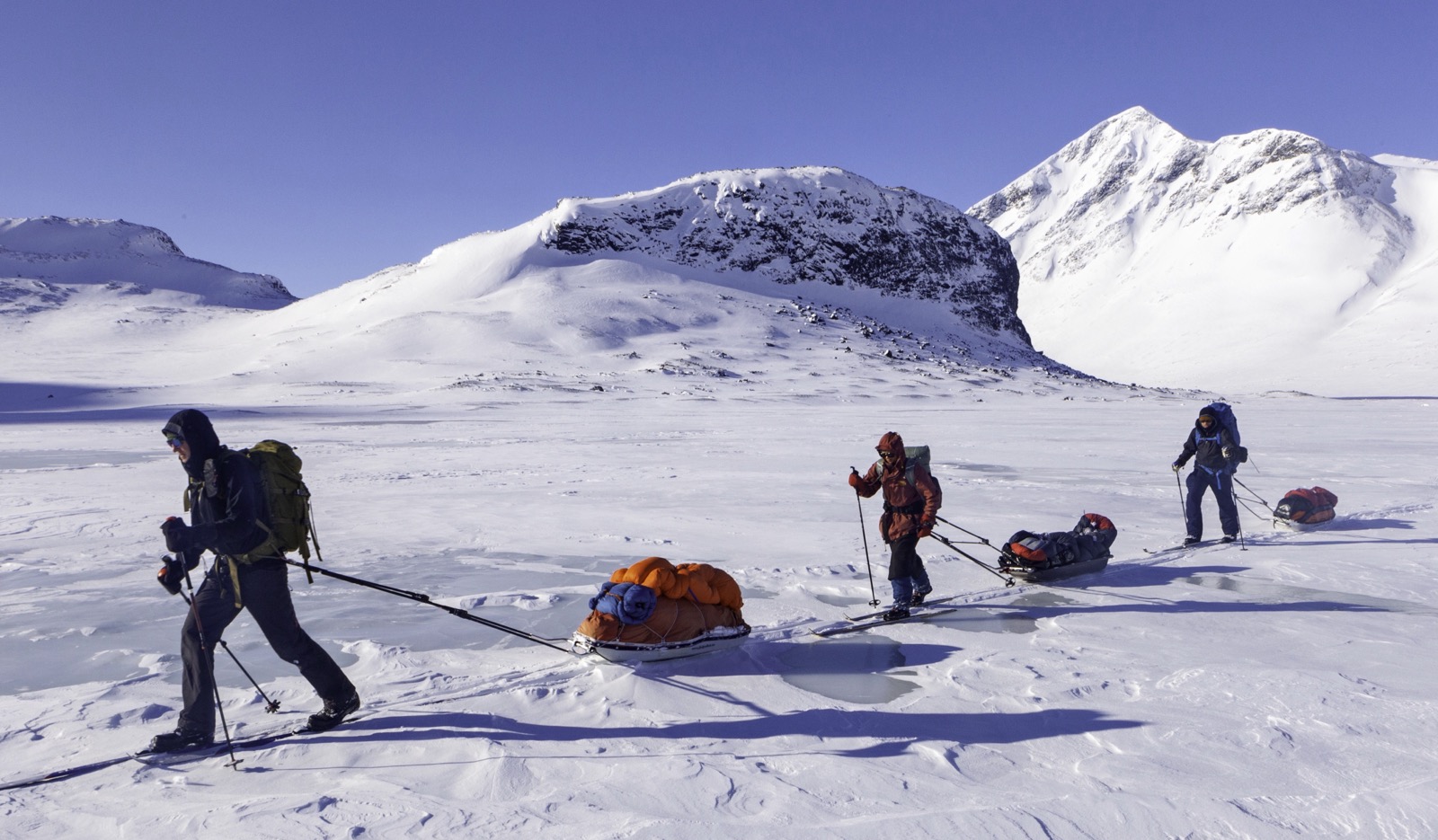
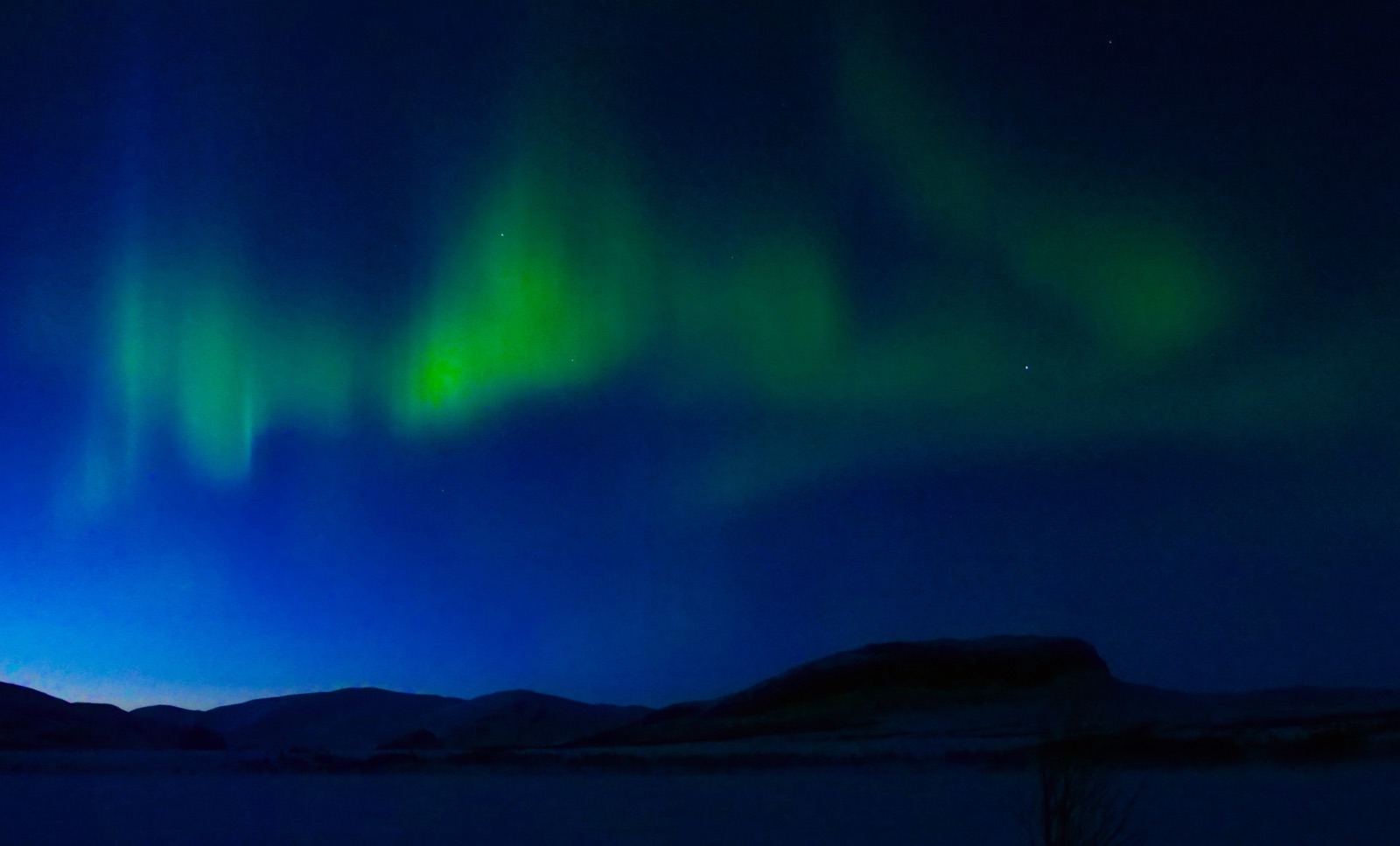
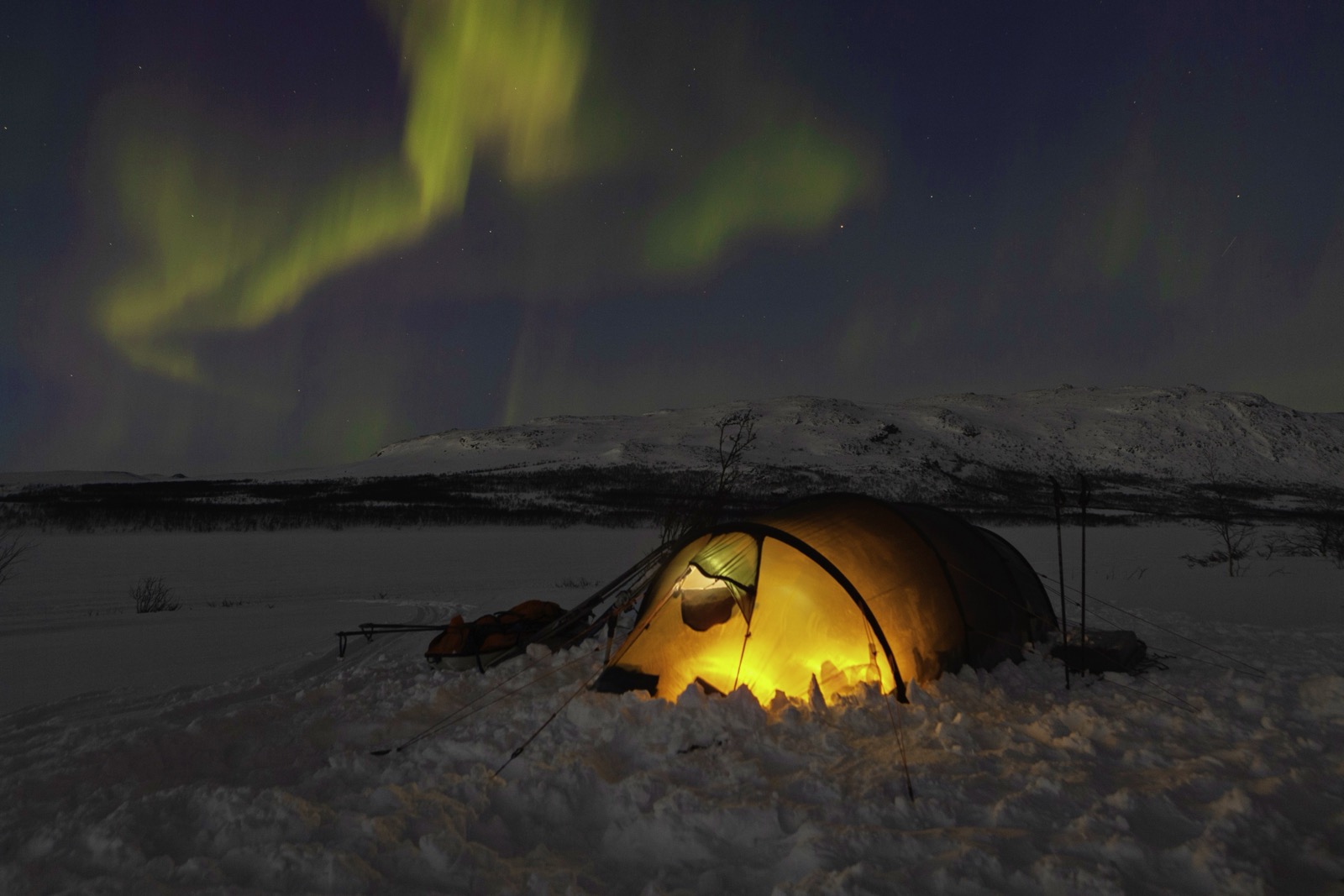
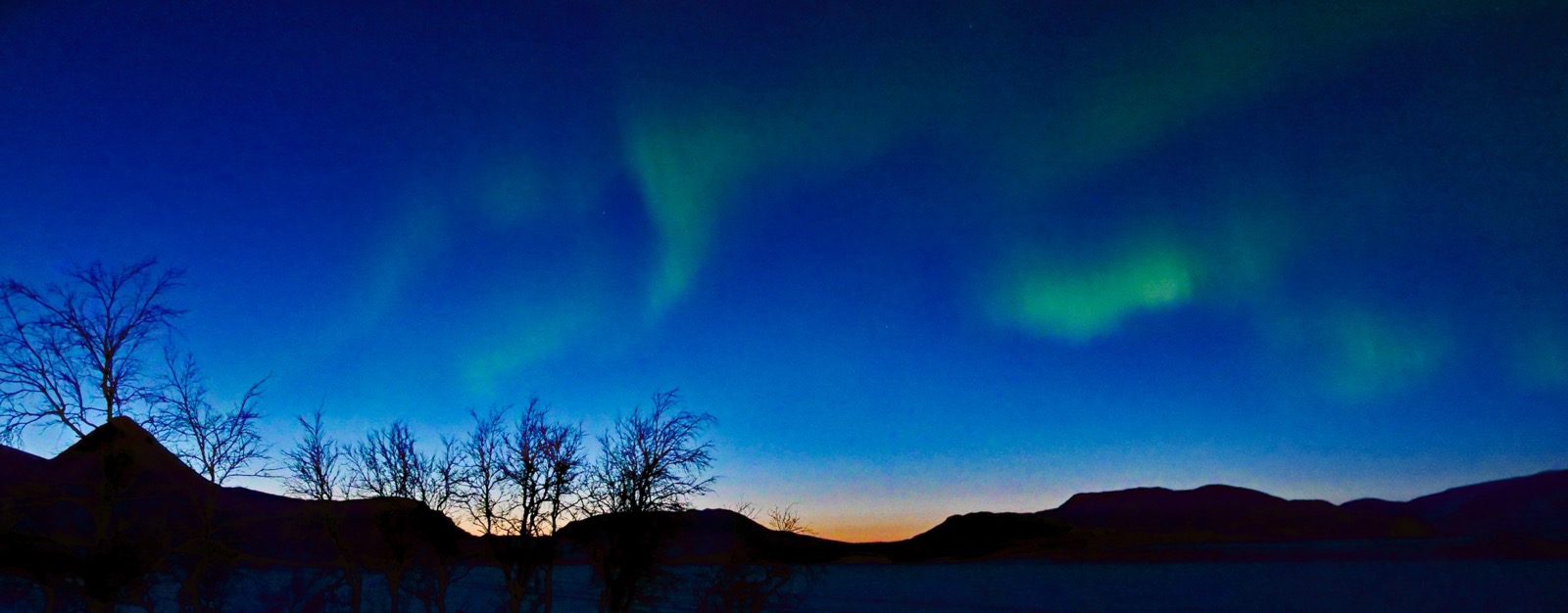
The seventh day and our last night out; we’re really starting to see the end in sight and are talking more and more about how great it’ll be to get to Salto and enjoy a beer and the sauna. But we ski out of the majestic landscape and set up camp on a headland. It turns out to be a spectacular finale on our last night. The temperature drops to the lowest we’ve experienced all week, and when the thermometer hits -30°C and can’t go any lower, we realize that the clear starry sky has something to do with it. Then something amazing begins to unfold right above us in the sky. It’s as if someone is pouring a paint can that flows and twists into various patterns from above, spreading out toward the horizons in different directions all at once. I jump and skip around the camp despite my back and the cold, and even manage to get my camera, which hasn’t seen Sarek nearly as much as I’d hoped precisely because there’s always something else to do. But now we’re spending at least 20–30 minutes outside gazing at this fantastic northern lights display and simply enjoying the fact that this was the icing on the cake of a varied trip in this wondrous land.
15KM
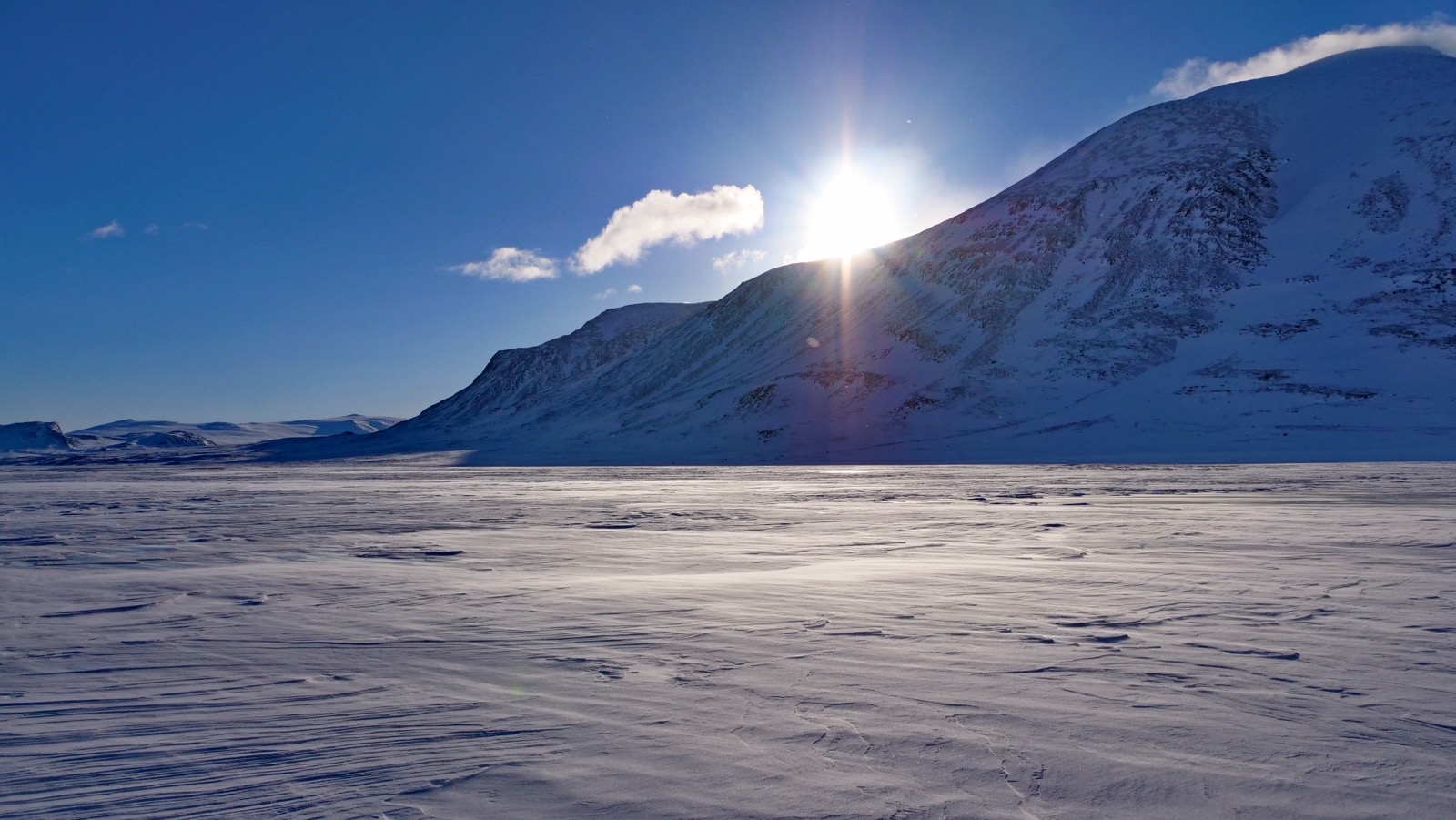
The eighth day is more or less a long stretch of travel across the second part of the lake, and I’m both freezing and feeling generally miserable. My body has been struggling to get through these stages, and now it feels like it’s starting to give up and I’m running out of energy. I fall behind, and it takes a lot of effort to work my way over the mountain and into the final valley toward Salto. It feels great when we wind our way down together through the birch forest toward the mountain lodge for a well-deserved shower, sauna, dinner, beer, and bed at the lodge.
10KM
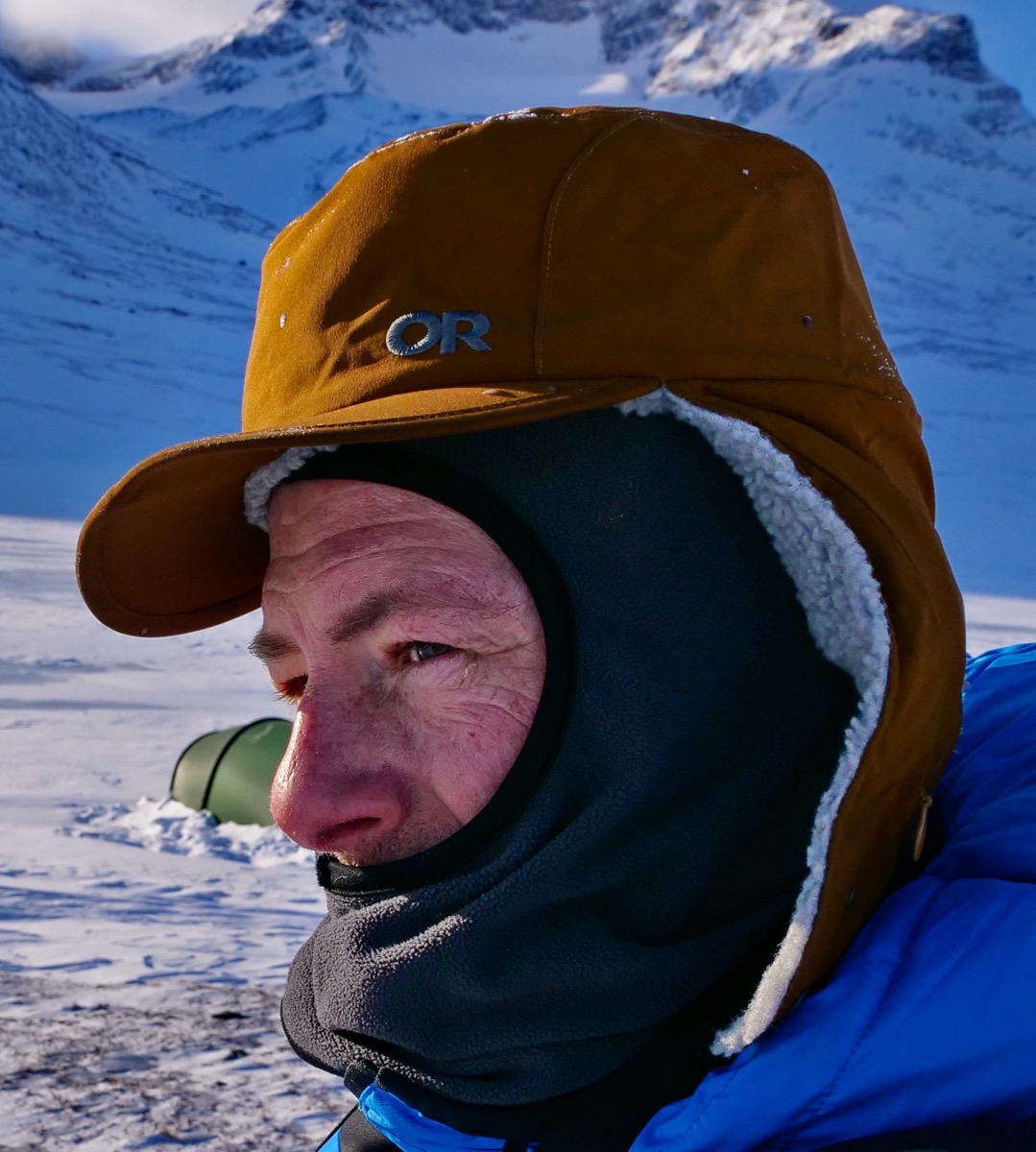
Finally, I’d also like to say a few words about each of you who made this a truly memorable and educational experience for me.
Daniel: A medal of honor for leadership that allows room to recognize one’s own shortcomings while also skillfully steering things in the right direction long before anything gets out of hand or becomes dangerous. You made wise decisions in tough conditions and guided us beautifully throughout the entire trip. Thank you!
Åsa: You’re a rock! You taught me a lot about your tricks and routines in the tent—I learned so much. It was with a twinkle in your eye that we worked out a way of life that worked for us, and I’m grateful for everything you contributed.
Ulfson: I realized already on the train up there that you were a very humble and good person. You shared your experiences in such a thoughtful way during the trip, were attentive to how we were feeling, and offered encouragement during tough moments.
Tina: Even though it was brief since you turned back, I have to emphasize that you were brave to listen to your gut and make a decision that worked not just for you but for all of us.
As I said, I’ve grown in every way on this trip and am pleased with my performance, which ultimately helped me overcome a challenge that was difficult for me, thanks in large part to the wonderful way you treated me and each other. Thank you so much!
Best regards,
Mikael